Sell anything digital. Keep more of every sale.
Store, checkout, global tax and payouts in one account. 2% plus processing per sale, no monthly fee.

Creators already sell here.
- creators have signed up
- 65,000+
- countries supported
- 160+
- processed through Pocketsflow
- $70M+
One store for everything you make.
Downloads, courses, coaching, memberships and software sit in one store, with one checkout and one list of customers. Pick what you sell to see how creators like you set it up.
See creator pages built on Pocketsflow- CoachesSell calls, programs and a members community from one link.calls · programs · communities
- Course creatorsHost lessons, drip them weekly and give a certificate at the end.courses · cohorts · workbooks
- DesignersTemplates, kits and presets delivered the second a buyer pays.templates · ui kits · presets
- MusiciansBeats, sample packs and licenses, with a page that looks like you.beats · samples · licenses
- WritersEbooks and a paid newsletter on the same list of readers.ebooks · newsletters · guides
- Software and SaaSLicense keys, subscriptions and an API when you need one.apps · licenses · subscriptions
Everything you need to sell, in one place.
Products, checkout, email, subscriptions, payouts and your AI share one account and one dashboard. Start with a single product and add the rest when the business asks for it.
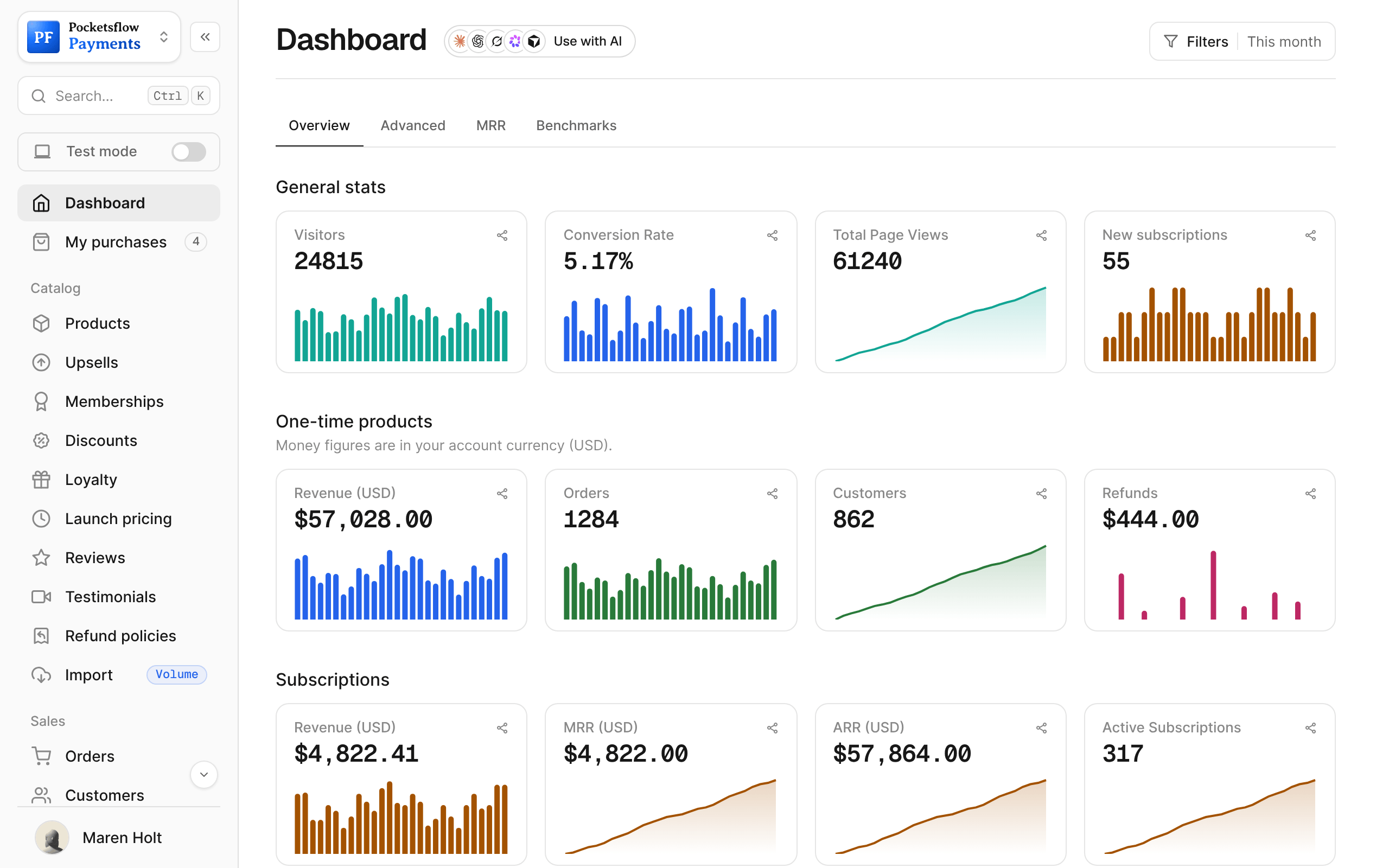
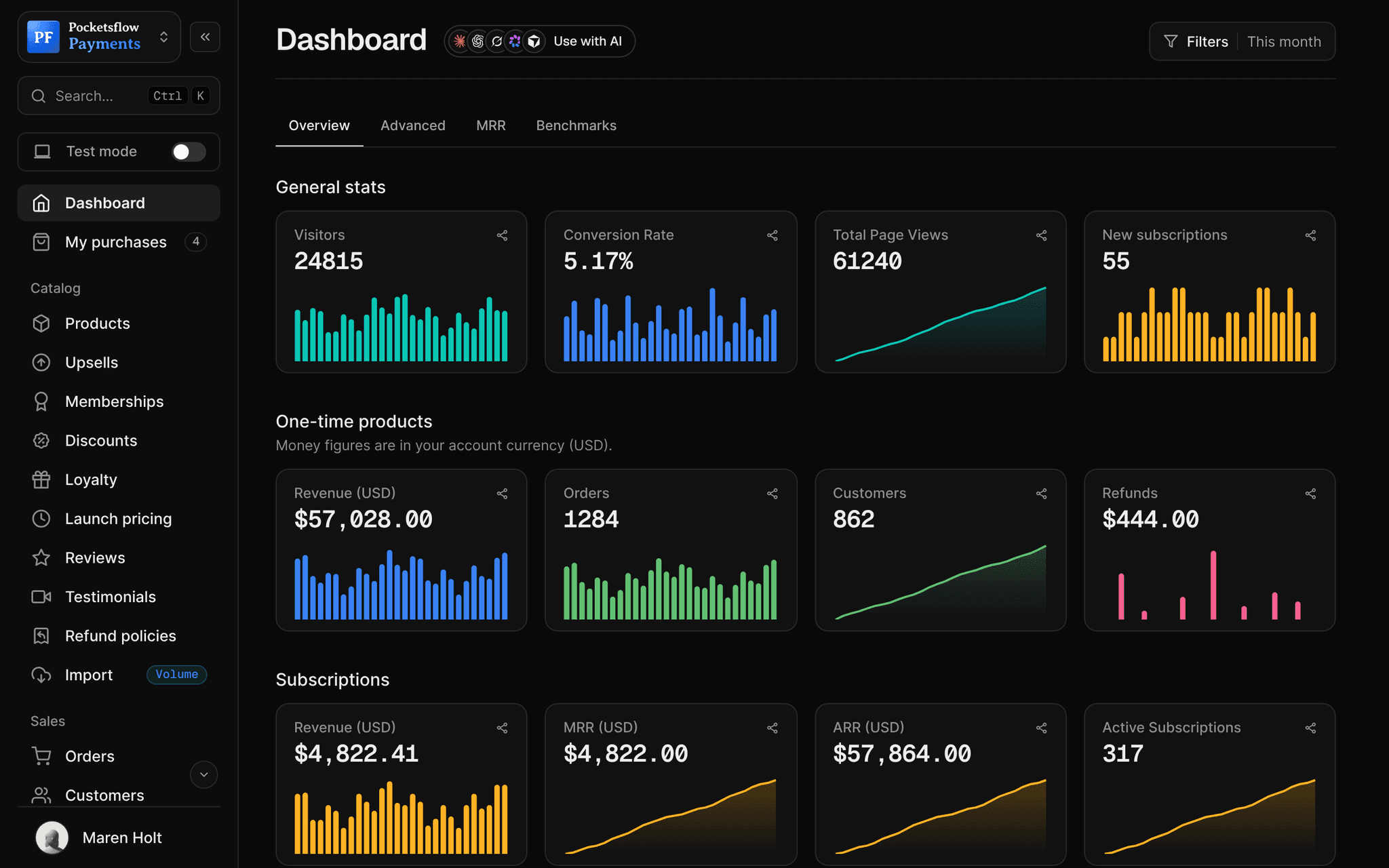
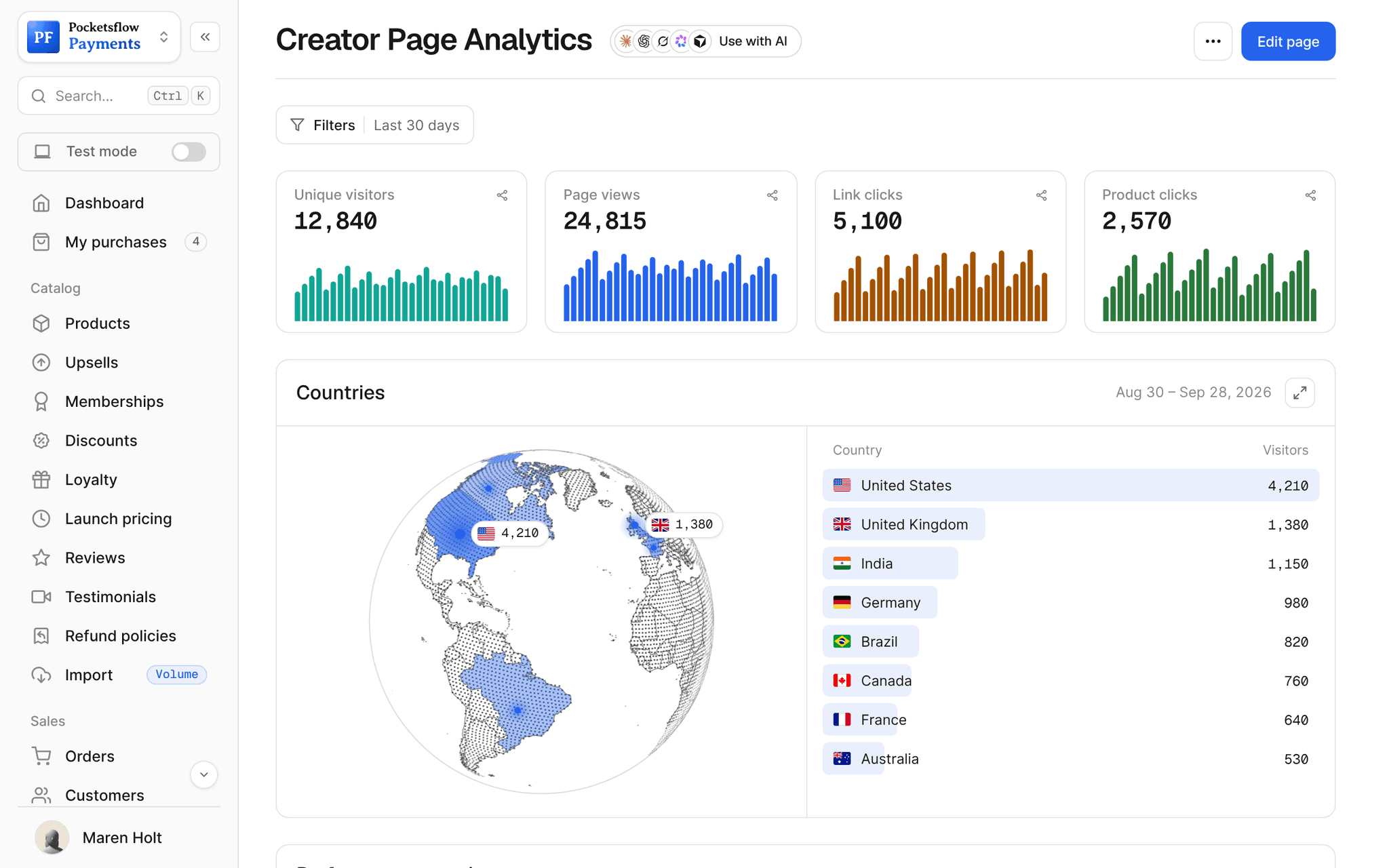
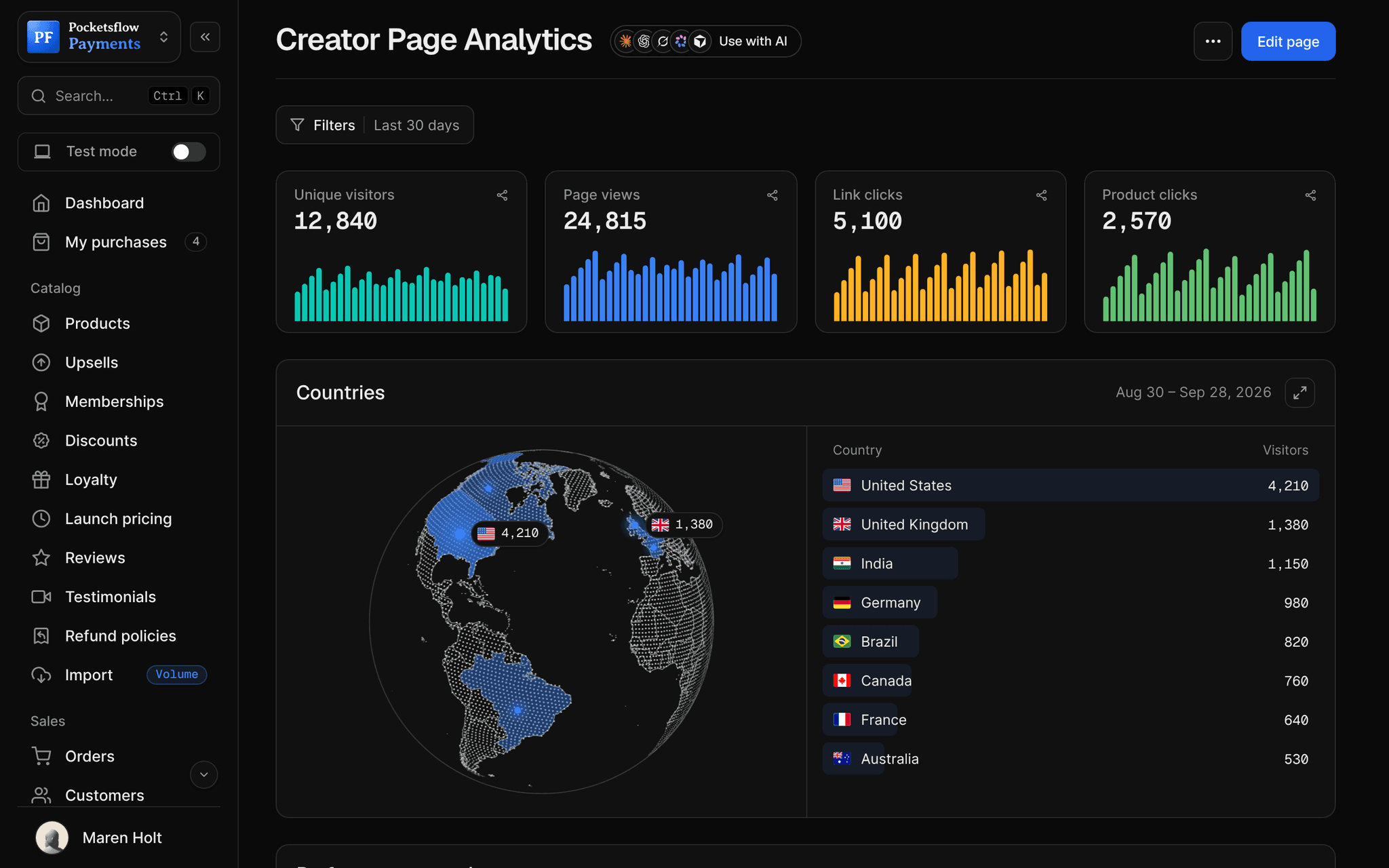
Every feature- Know what sellsViews, visitors and clicks for your page, next to revenue for every product.
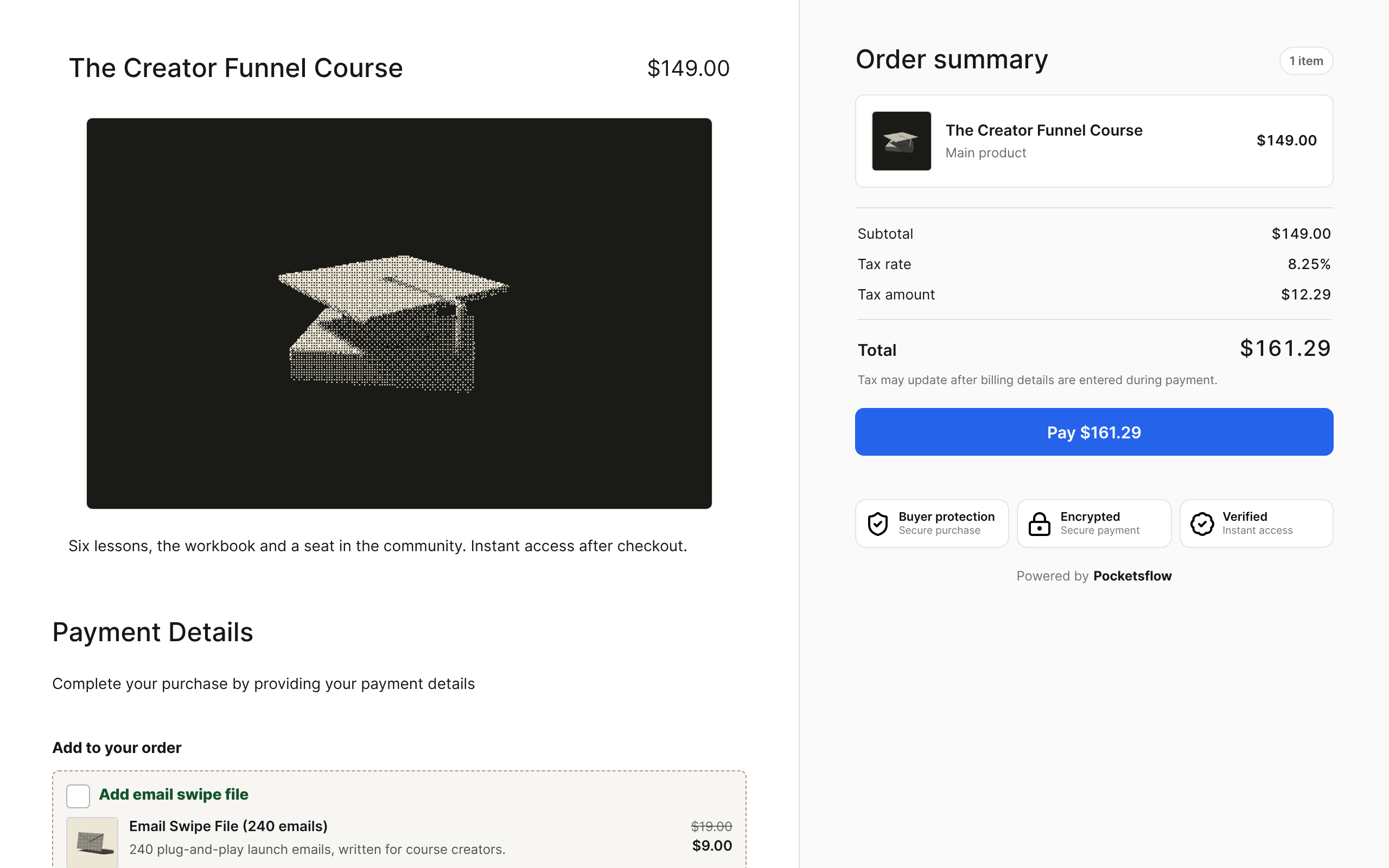
- A checkout built to convertOrder bumps, tax and trust badges on one clean page.
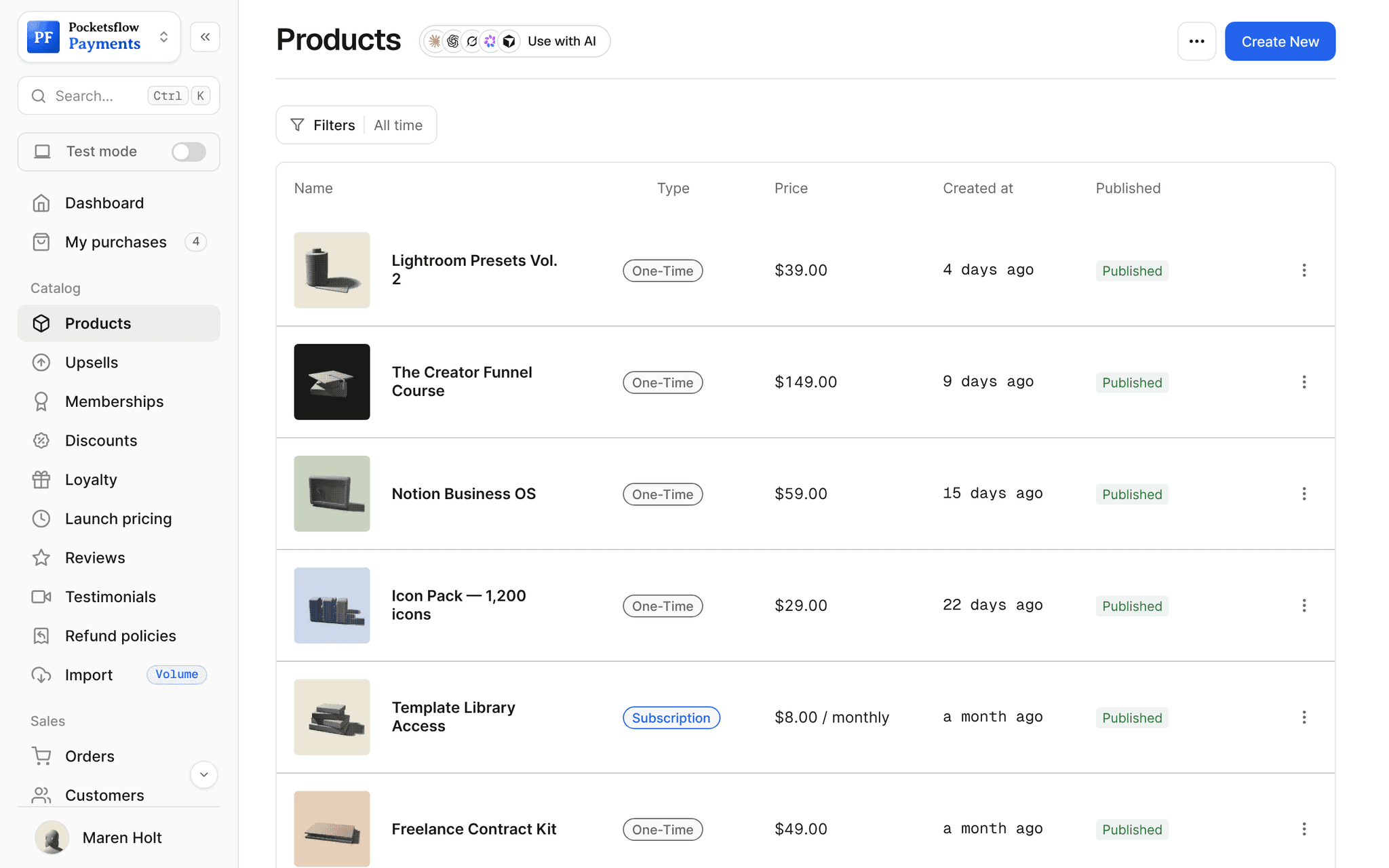
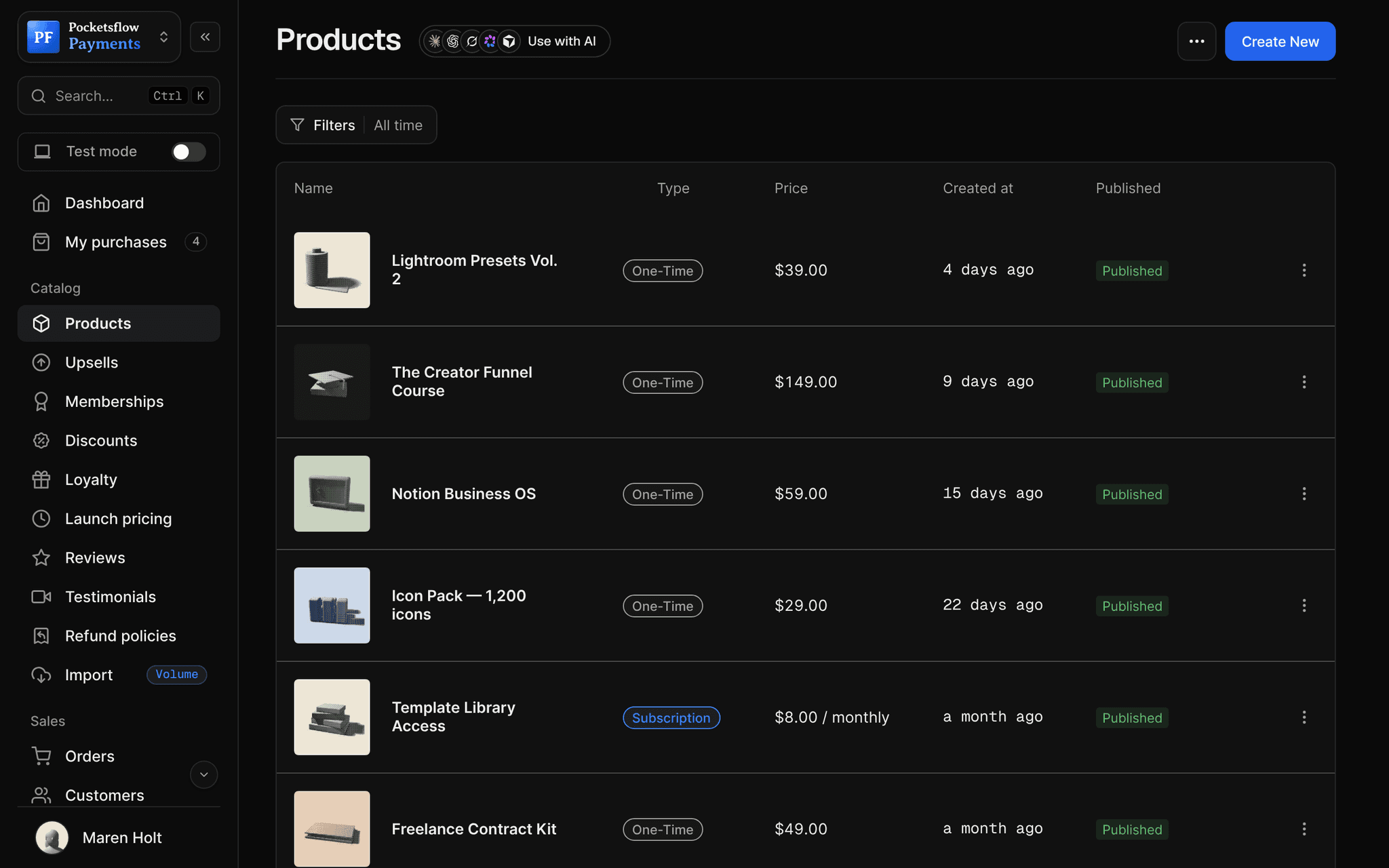
- Sell anything digitalDownloads, courses, links and subscriptions side by side.
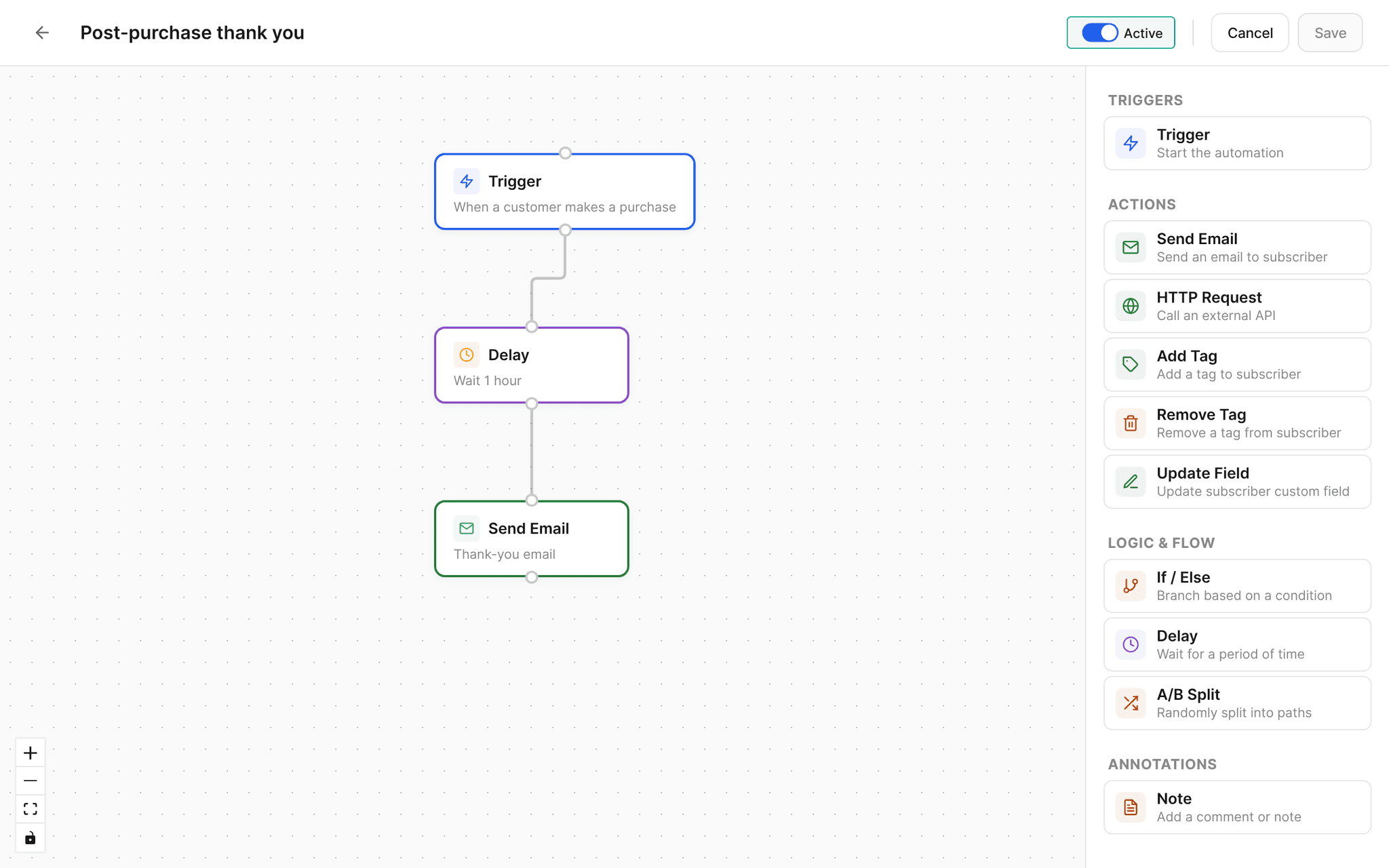
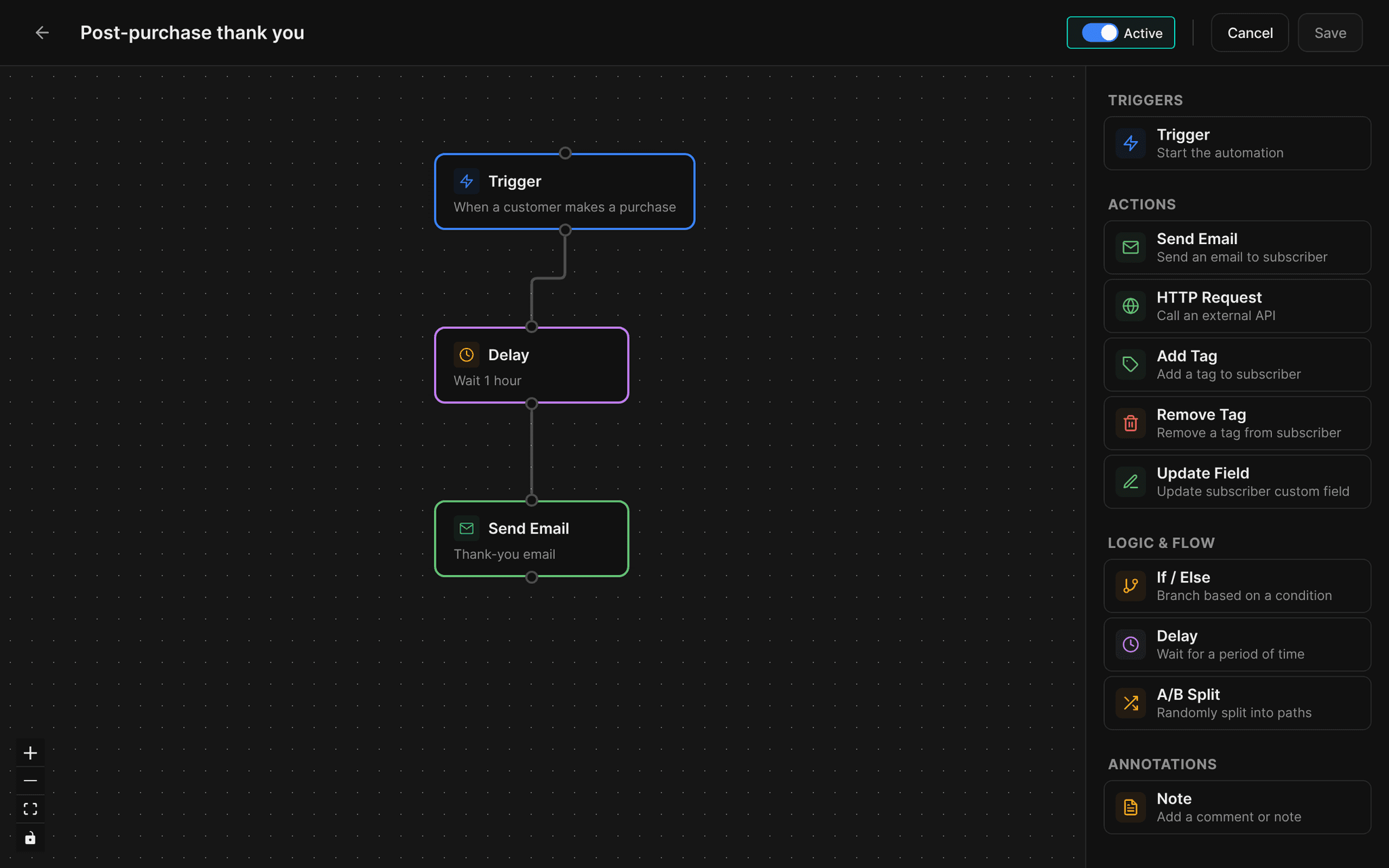
- Email that sends itselfA thank-you an hour after every purchase, on autopilot.
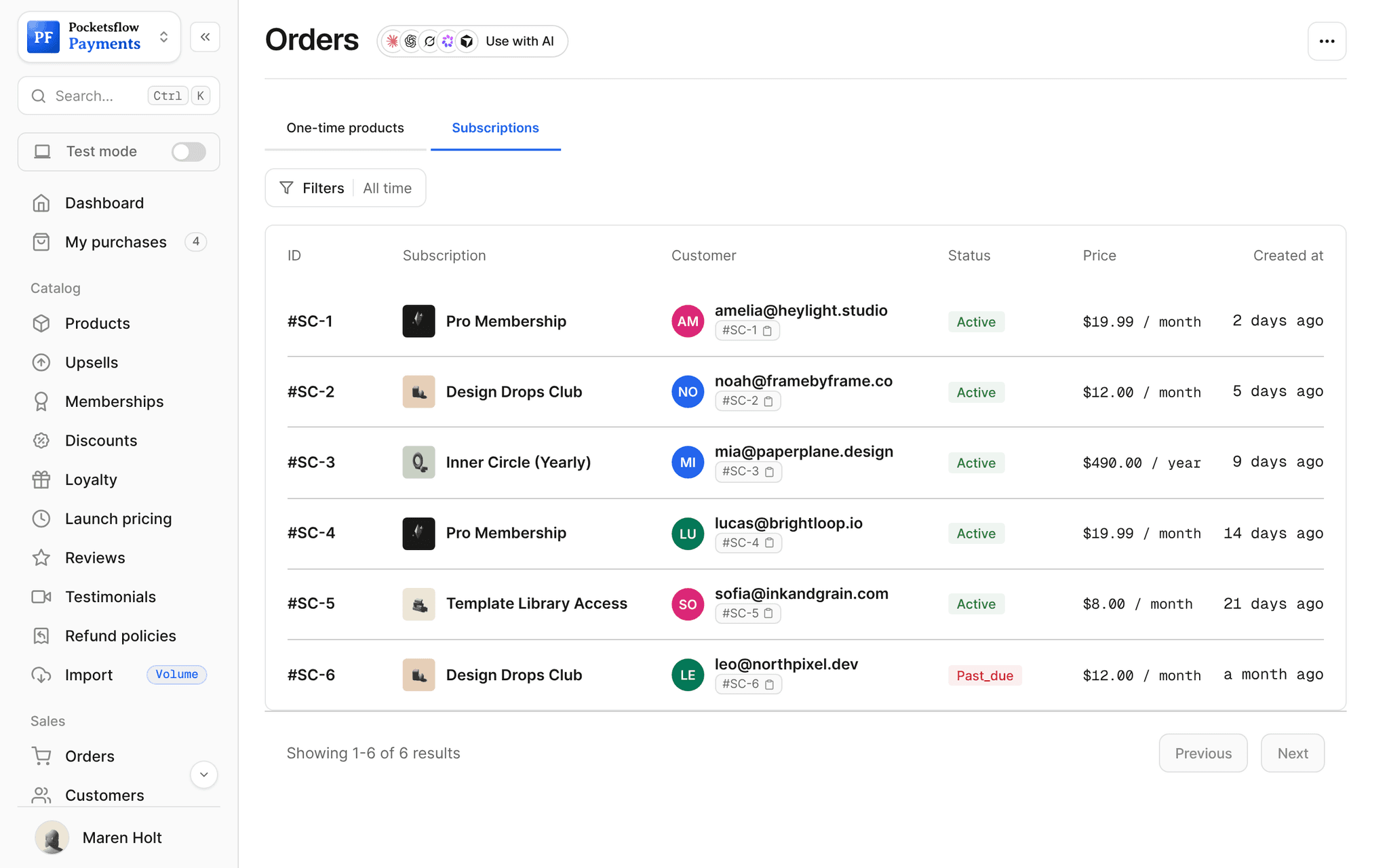
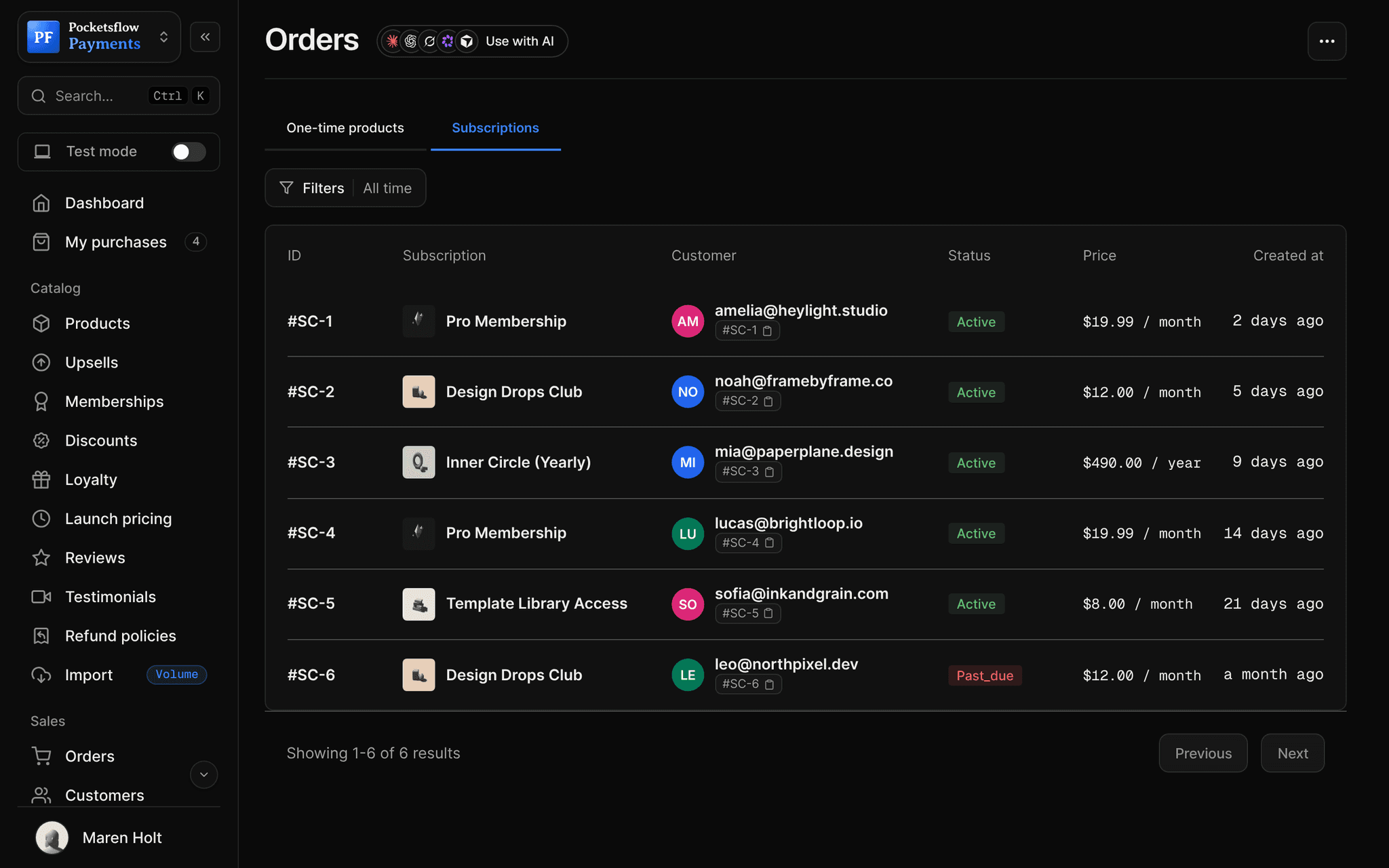
- Recurring revenueMonthly or yearly plans with trials, pause and resume.
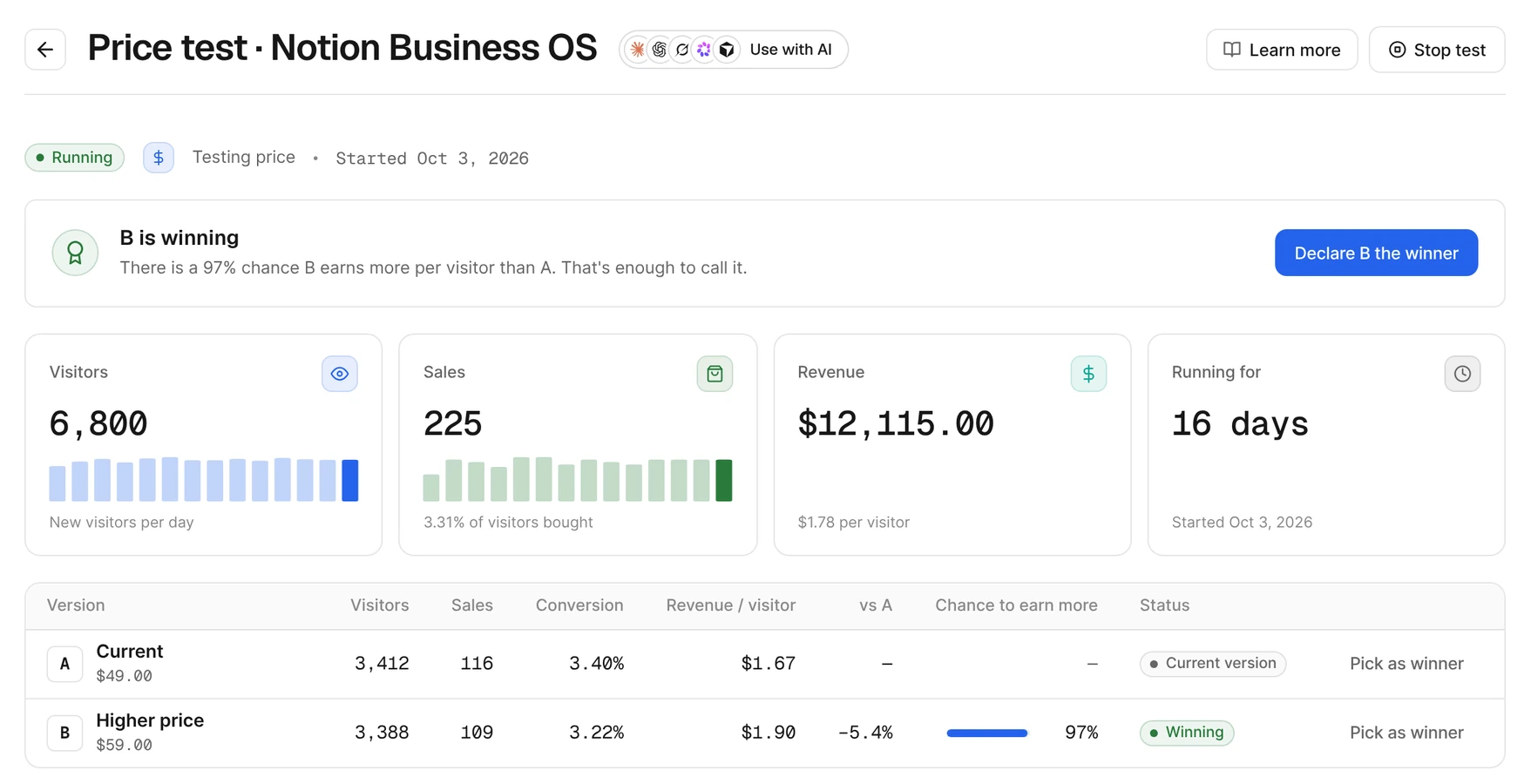
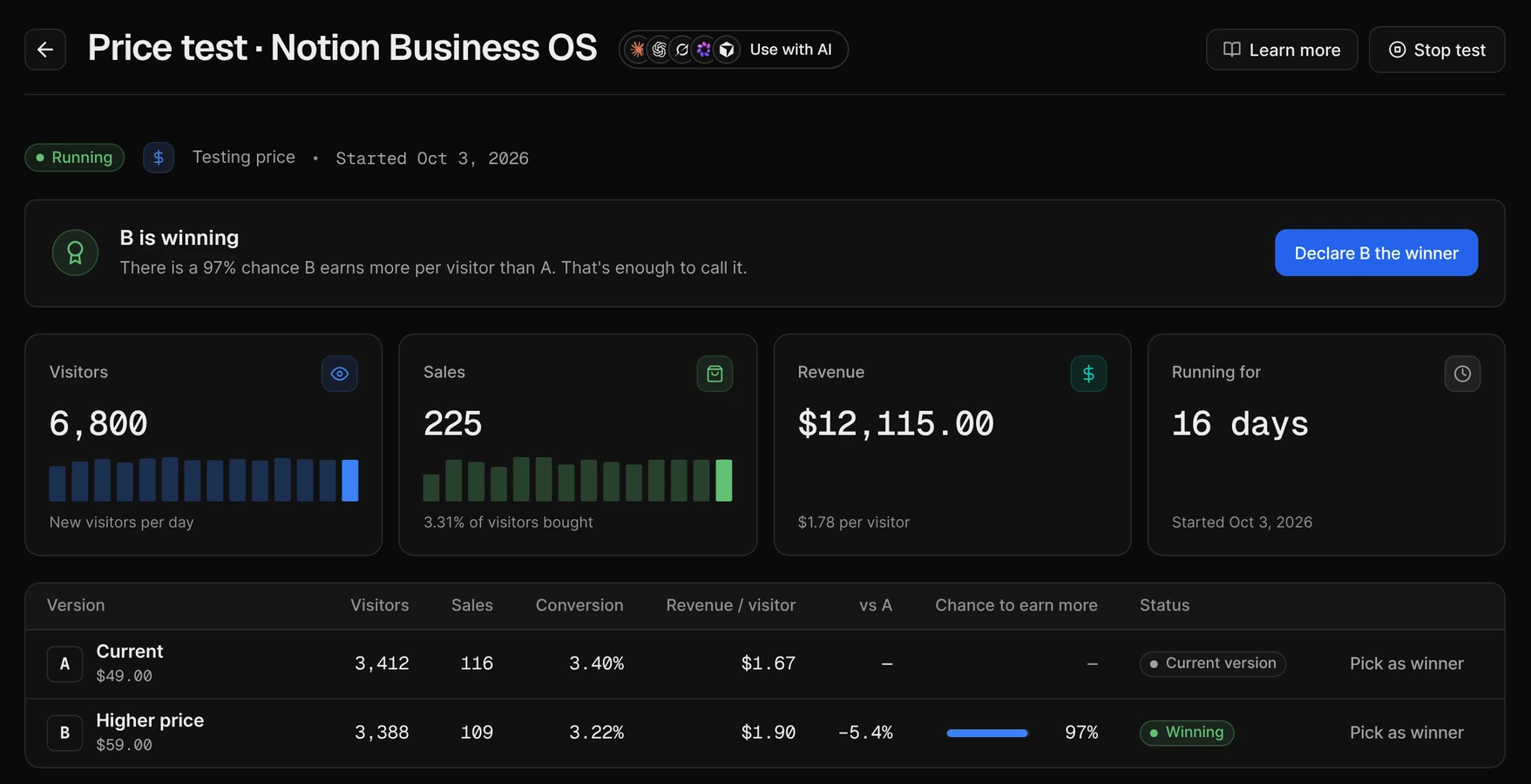
- Test prices, keep the winnerTwo prices, one page: see which earns more per visitor.
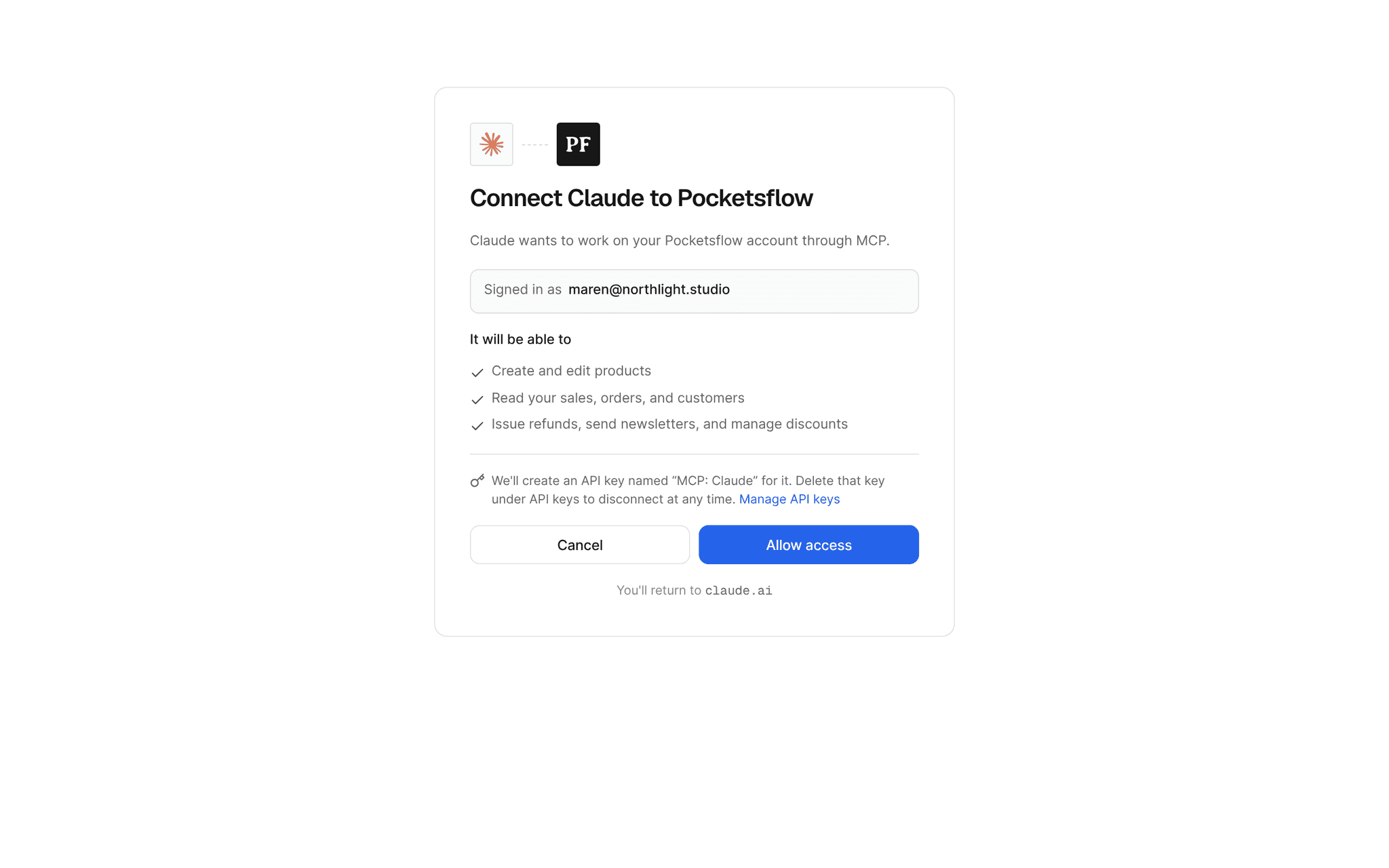
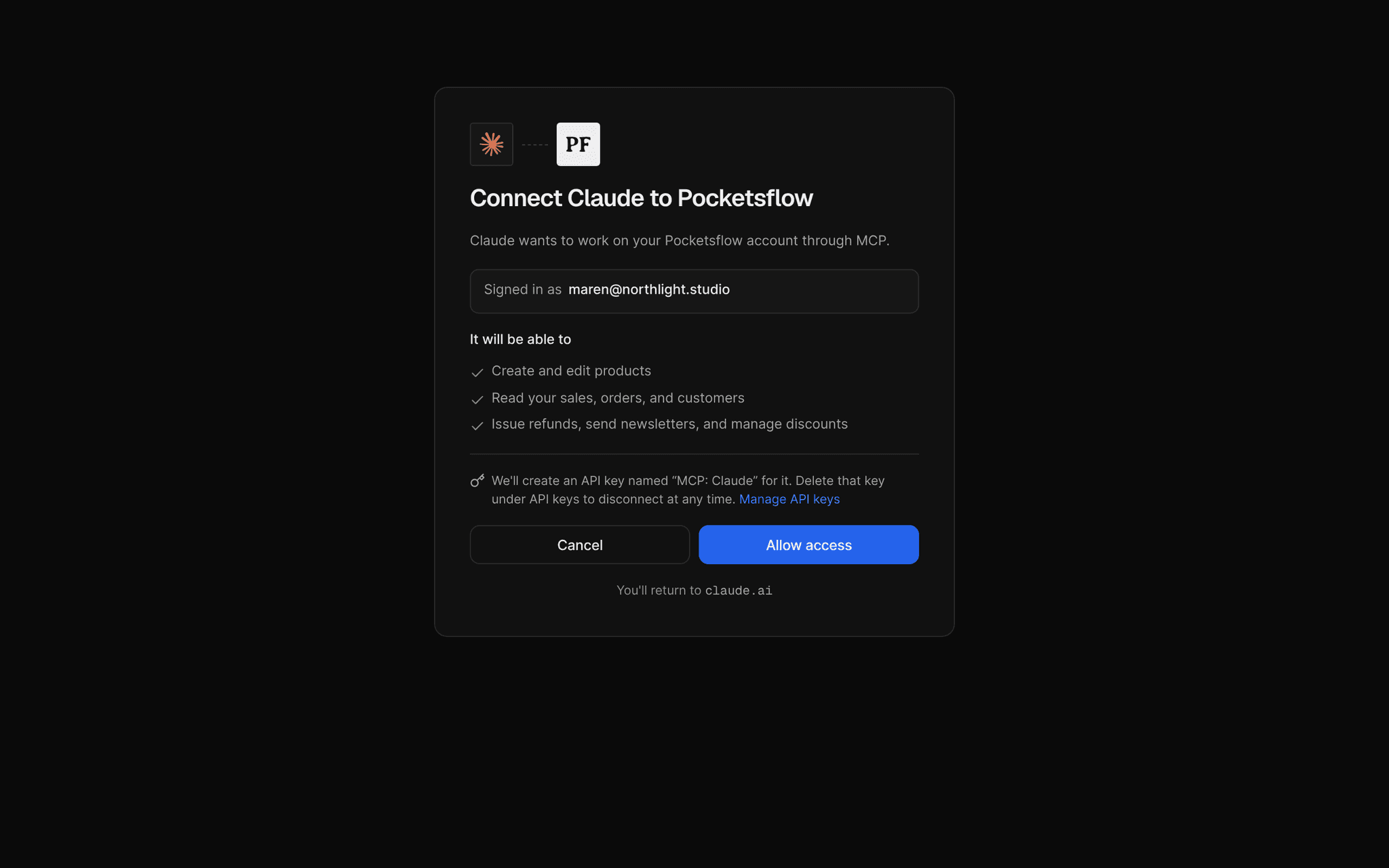
- Run it from your AIClaude, ChatGPT or Cursor connect with one consent screen. No API key.
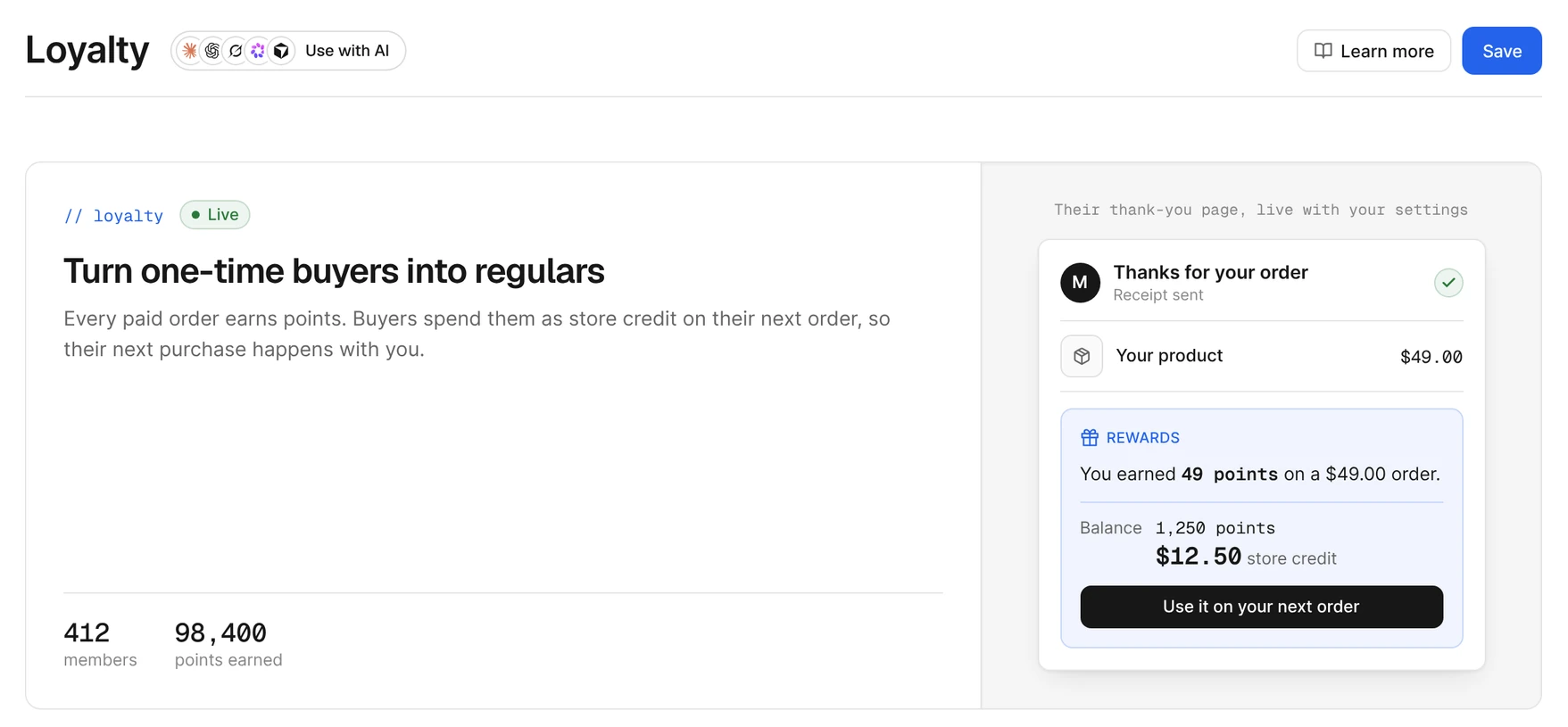
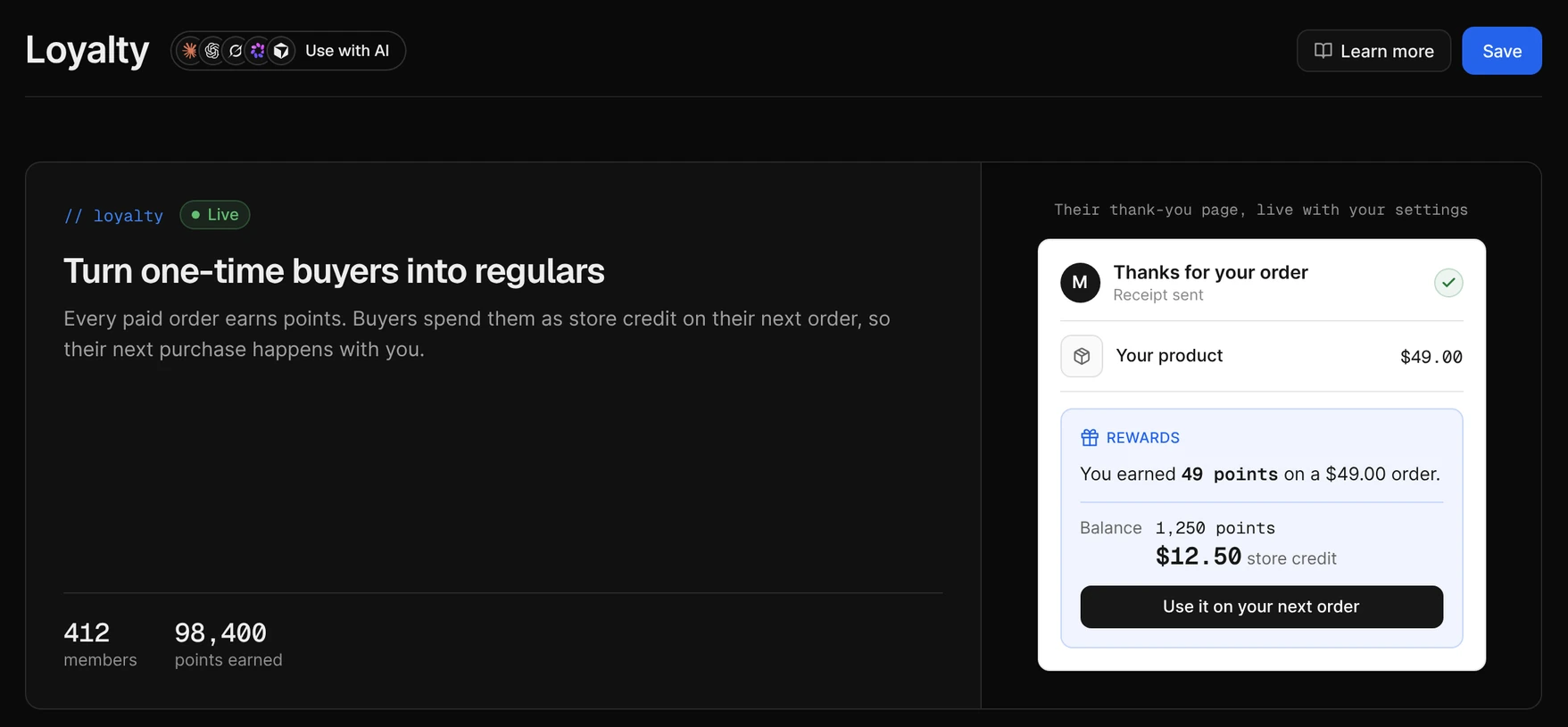
- Points that bring buyers backPoints on every order, spent as store credit at checkout.
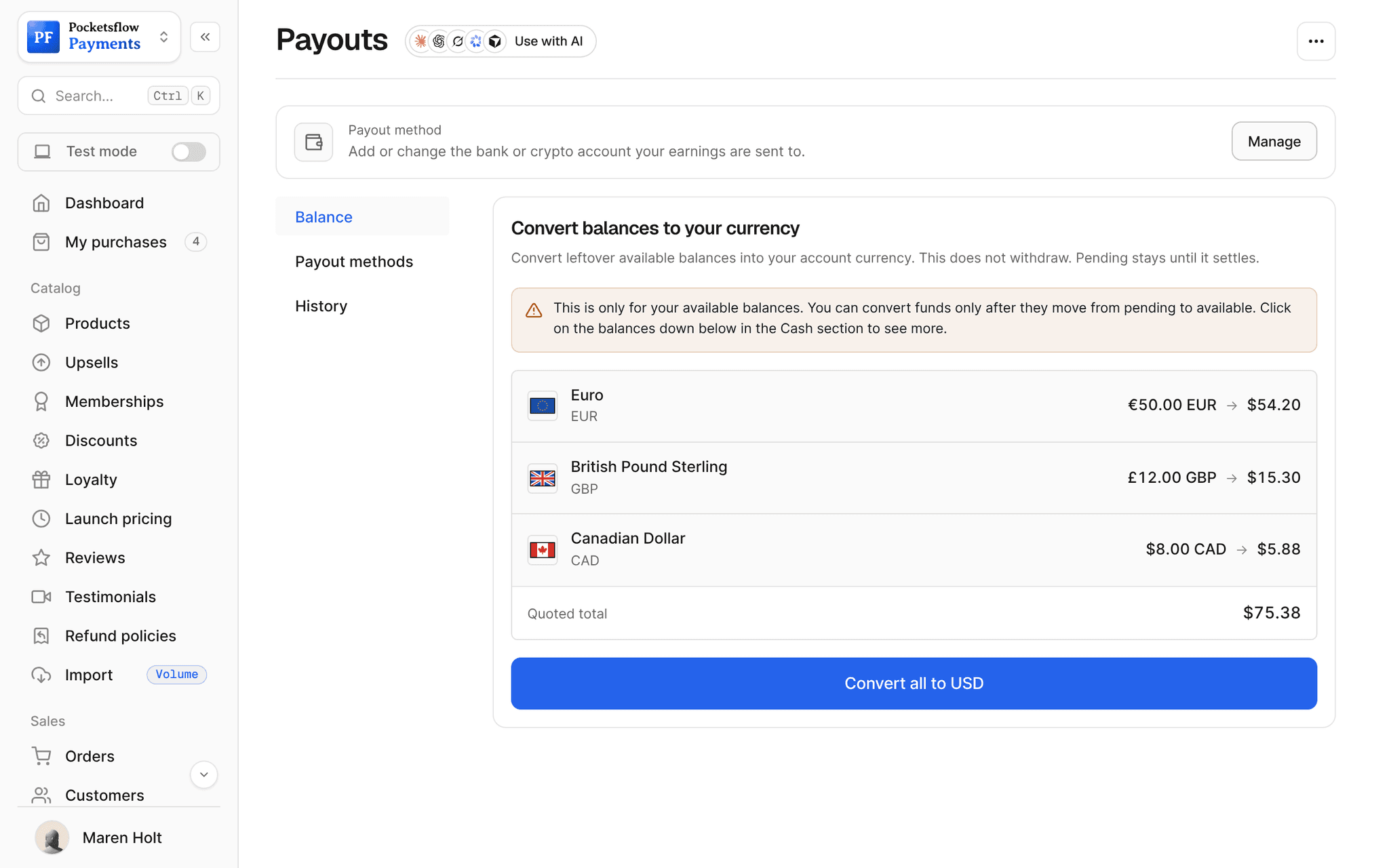
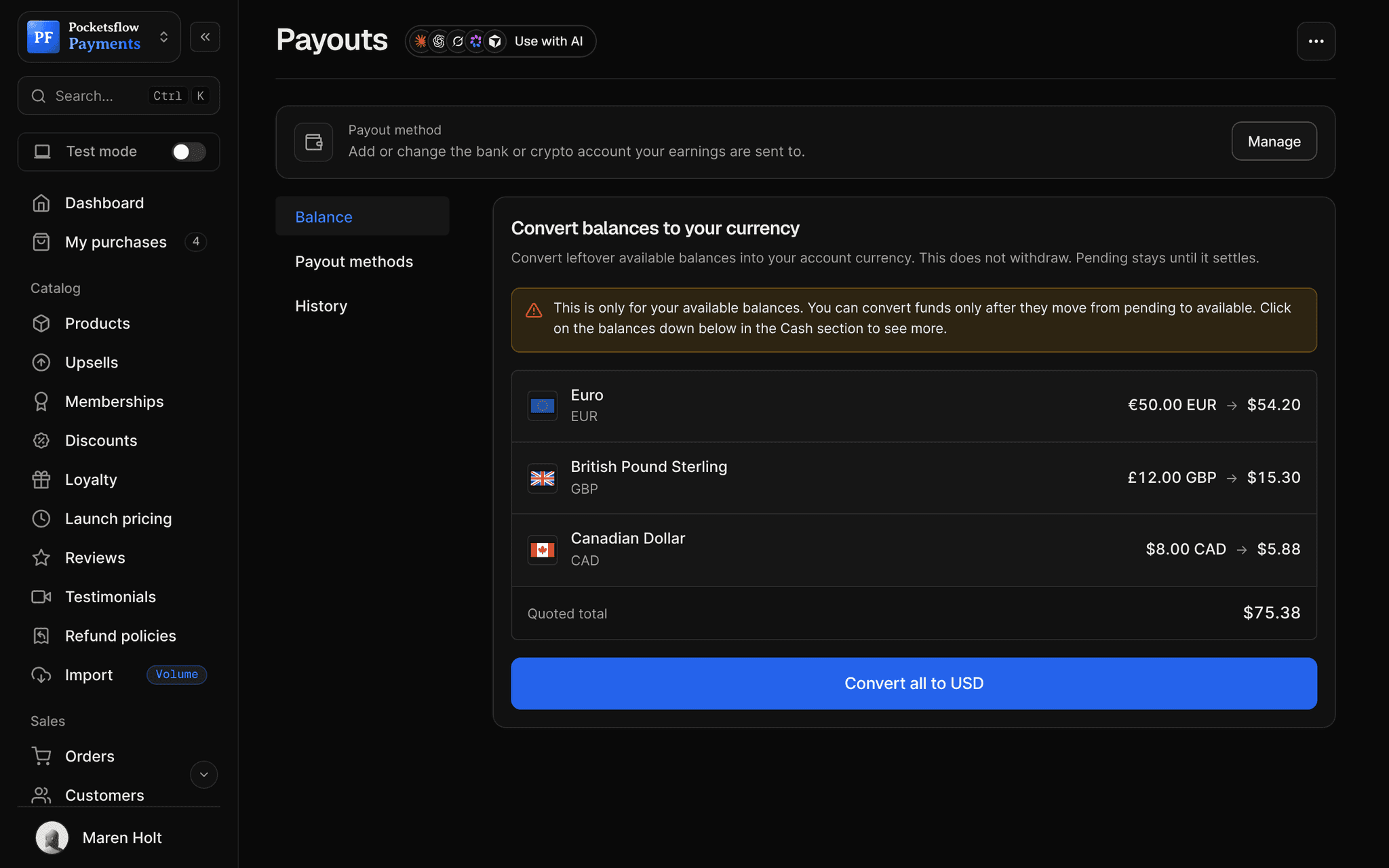
- Get paid in your currencyConvert foreign balances, then withdraw to your bank.
Every sale, the moment it lands.
Orders, revenue and the tax handled on each sale update as buyers pay, in every currency and country, with nothing to reconcile.
Everything in the dashboard- 500 creditsA$48.49
- Spanish in 90 DaysCA$199.70
- Tidy for Mac€21.15
- Procreate Brush Box¥2,970
- GBVAT 20%
- US-TXSales tax 8.25%
- INGST 18%
- JPJCT 10%
- NLVAT 21%
- CA-ONHST 13%
- AUGST 10%
Illustrative sales from our demo creators. Revenue in USD, before tax.
Run your store from the AI you already use.
Ask in plain words from your laptop, your phone or your terminal. Your AI creates the product, sets the discount, tells you how sales went and issues the refund, and every change lands in your dashboard.
Works with Claude, ChatGPT, Codex, Grok, Grok Bot, Muse Spark and Cursor. Sign in, click Allow, no API key.
 Claude · Desktop app
 Codex · Terminal
Things to ask
- Create a $19 ebook and give me the checkout link
- Who are my top 10 customers this month?
- Pause Jane's yearly plan until March
- Email my list about the spring sale
- Add a $9 upsell to my presets
Your AI runs the store. All of it.
Connect Pocketsflow to the AI you already use and it can create products, launch a sale, email your list or refund an order, with the same tools as the dashboard.
See every toolClaudeCreate a $29 presets pack and give me the checkout link.
Done. Portra 400 Preset Pack is live at $29, and the checkout link is ready.
- create_product
- create_checkout_session
Real asks and the real tools they run. The store is Inês Duarte's, one of our demo creators.
Tools your AI can run
293actions on your store, in 46 groups, from Claude, ChatGPT, Cursor or any app that speaks MCP. Ask in plain words; it does the clicking.
- Memberships and communitieslist_memberships17tools
- Launch pricinglist_flash_sales14tools
- Migrationslist_import_platforms12tools
- Newsletterslist_posts10tools
- Teamlist_team_members10tools
- Agenciesget_agency10tools
From product form to product page in minutes.
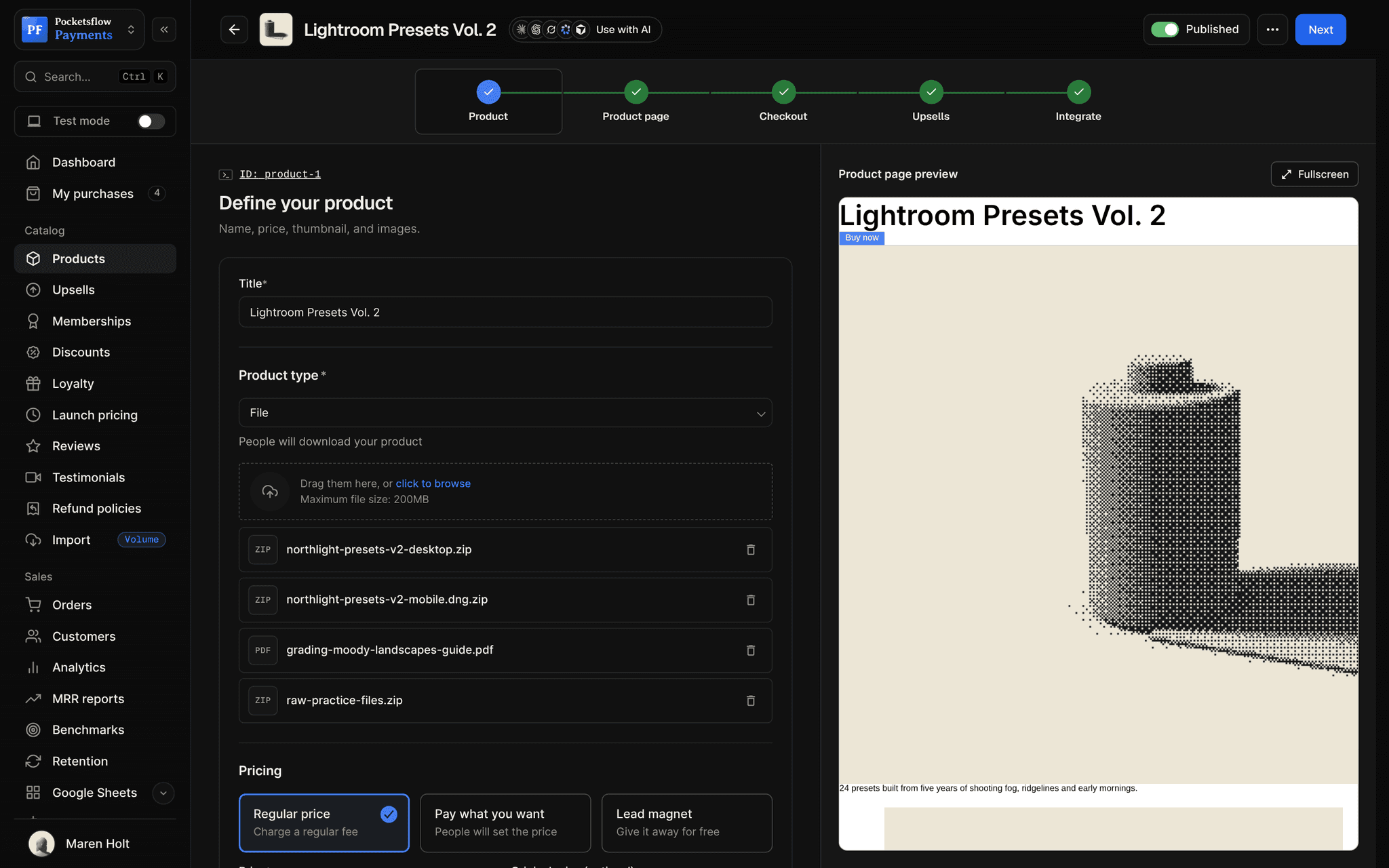
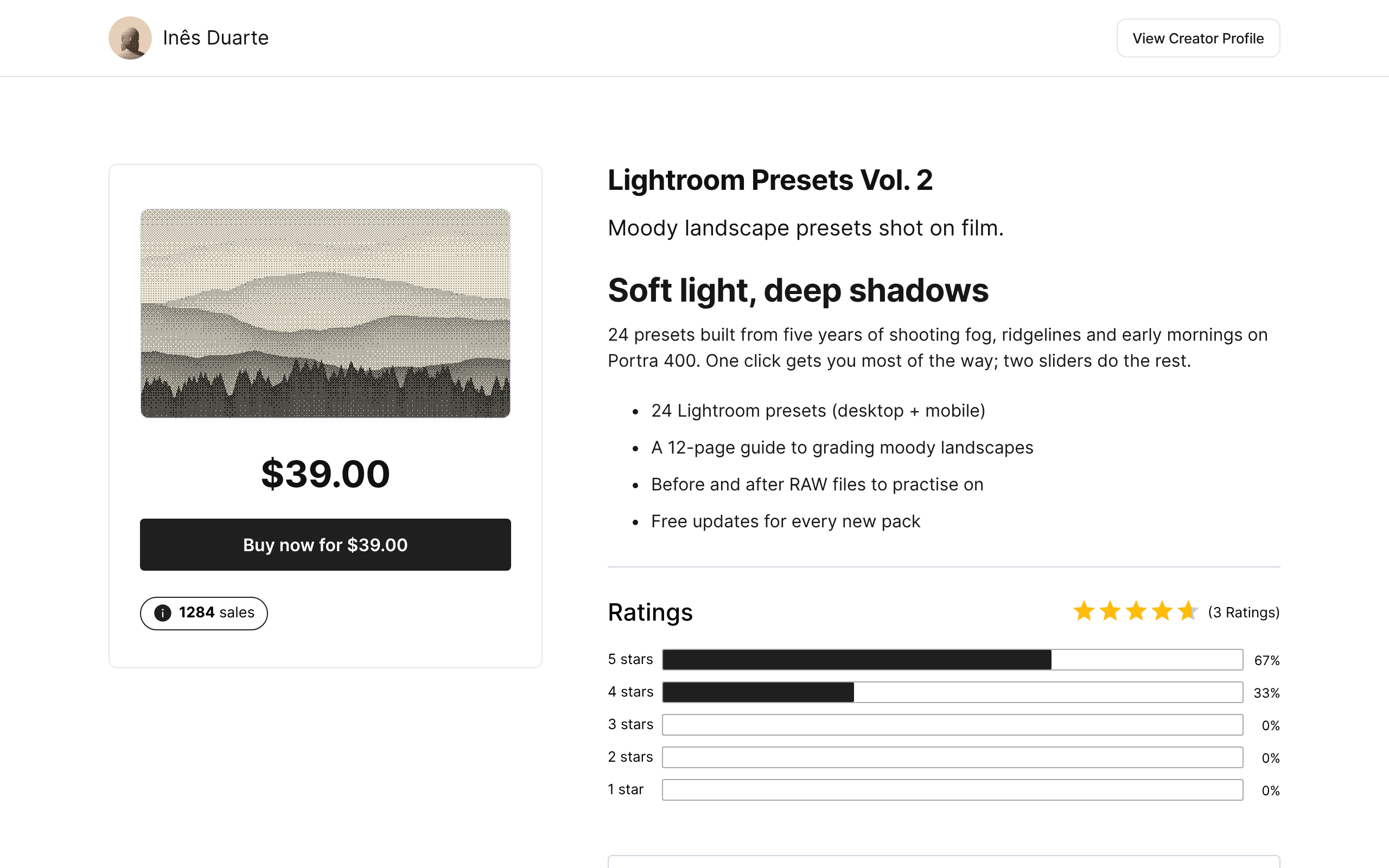
Name it, price it, add the files. The editor previews the page as you type, and the moment you publish, buyers get a page with your photos, your reviews and a one-click buy button.
Sell digital products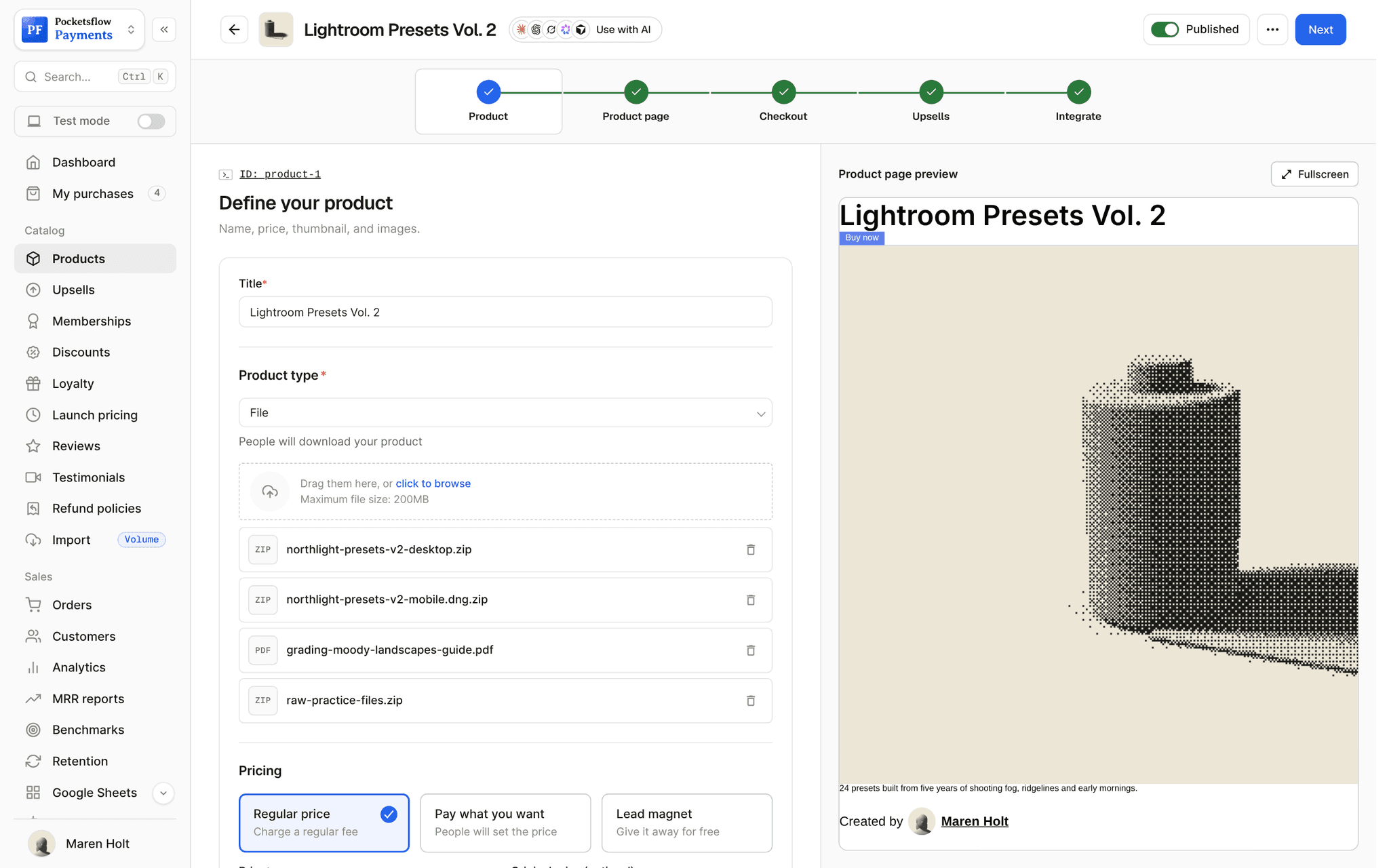
Creator pages that sell.
One link for your bio, with your products, links, and socials on it, and checkout built in. Pick a template, make it yours, and start selling in minutes. Scroll inside any page to explore it.
- inesonfilm.pocketsflow.comInês DuartePortraFilm photographer
One booking link up top, products below. A quiet palette that lets the work carry it.
- studionord.pocketsflow.comStudio NordStorefront DarkUI kits & icon sets
Products first, links second. A catalog seller should lead with the shelf.
- hanadraws.pocketsflow.comHana ParkNeo BrutalIllustrator
Hard shadows and a flat yellow. Personality is the product, so the page shows it.
- kofibeats.pocketsflow.comKofi MensahSunset GrainMusic producer
A loud gradient for a loud genre. The new pack sits first so it gets the clicks.
Demo pages. The creators are fictional; every template is real.
Earn more from the traffic you already have.
Upsells, bundles, launch pricing, funnels and price tests run on the checkout you already use. Each one shows you what it earned.
Every growth tool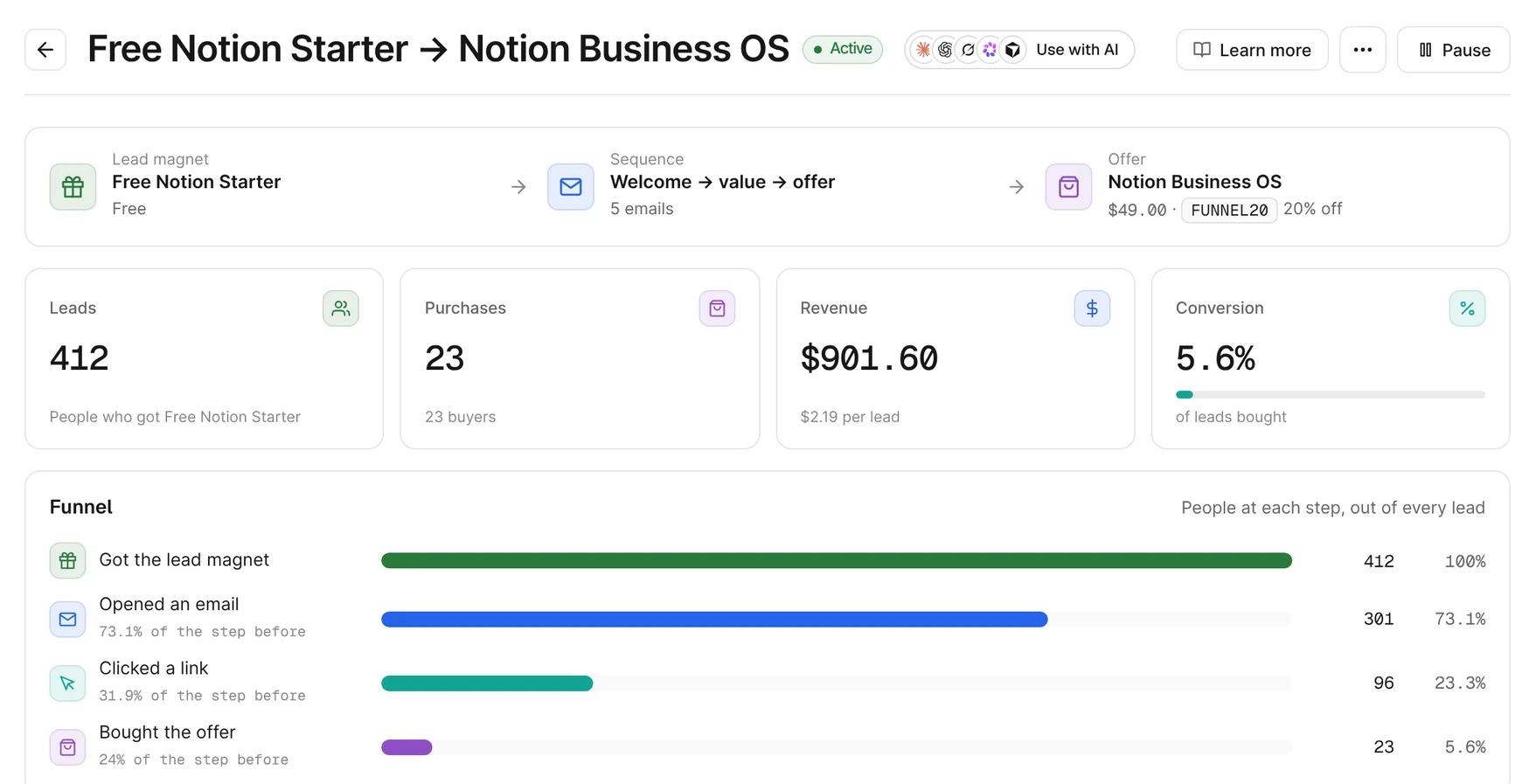
Offers after checkout
One-click post-purchase upsells, payment plans and an offer before a buyer leaves.
Growth and upBundles and buy more, save more
Sell products together at one price, or give a bigger discount as buyers add more.
Growth and upLaunch pricing
Flash sales with a live countdown, early-bird spots and fair prices by country.
Growth and upSales funnels
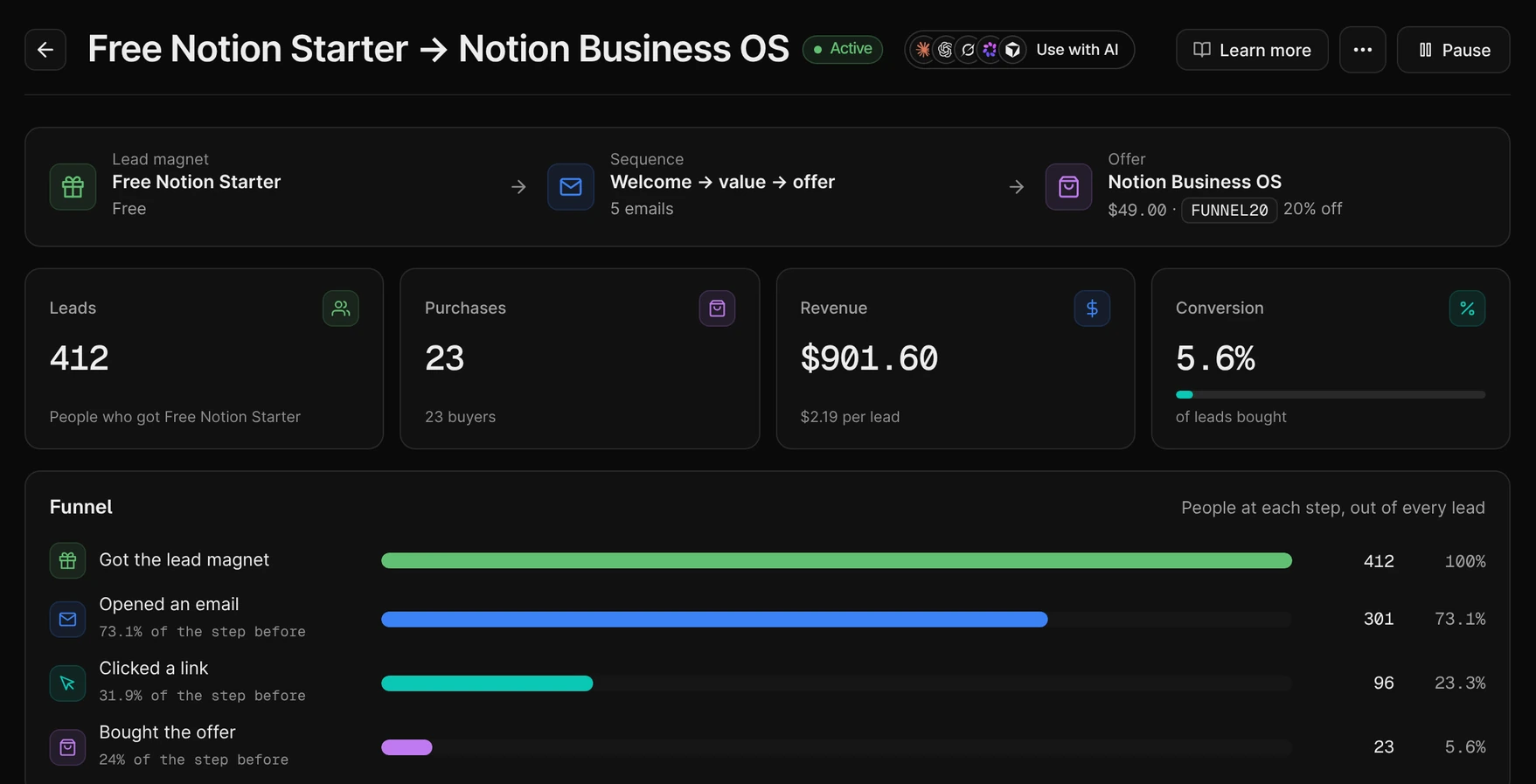
A free lead magnet, an email sequence and an offer in one flow, with the drop-off at every step.
Growth and upA/B tests
Test two prices, headlines, covers or checkout layouts on real visitors, then keep the winner in one click.
Pro and up
One tap at checkout. A bigger order.
Offer a second product right in the checkout. The buyer ticks it, pays once, and the bigger order lands in your dashboard.
Upsells and order bumps- Show the order bump
- Buyer adds it
- One payment
An illustrative order on Maya Lin's store, one of our demo creators. Prices before tax.
Turn one-time buyers into regulars.
Memberships, loyalty points and retention tools give buyers a reason to come back, and keep subscribers paying.
Every retention tool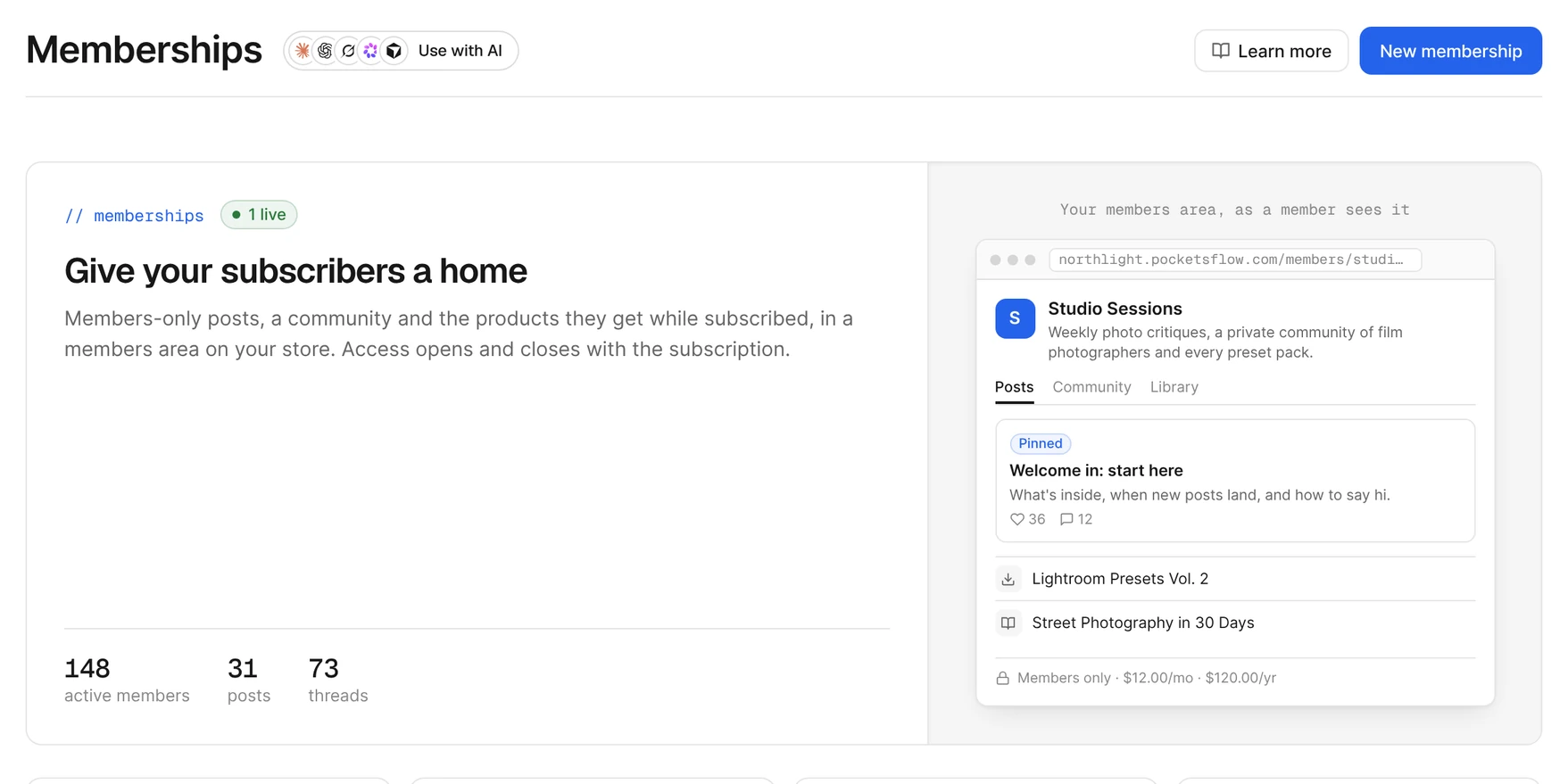
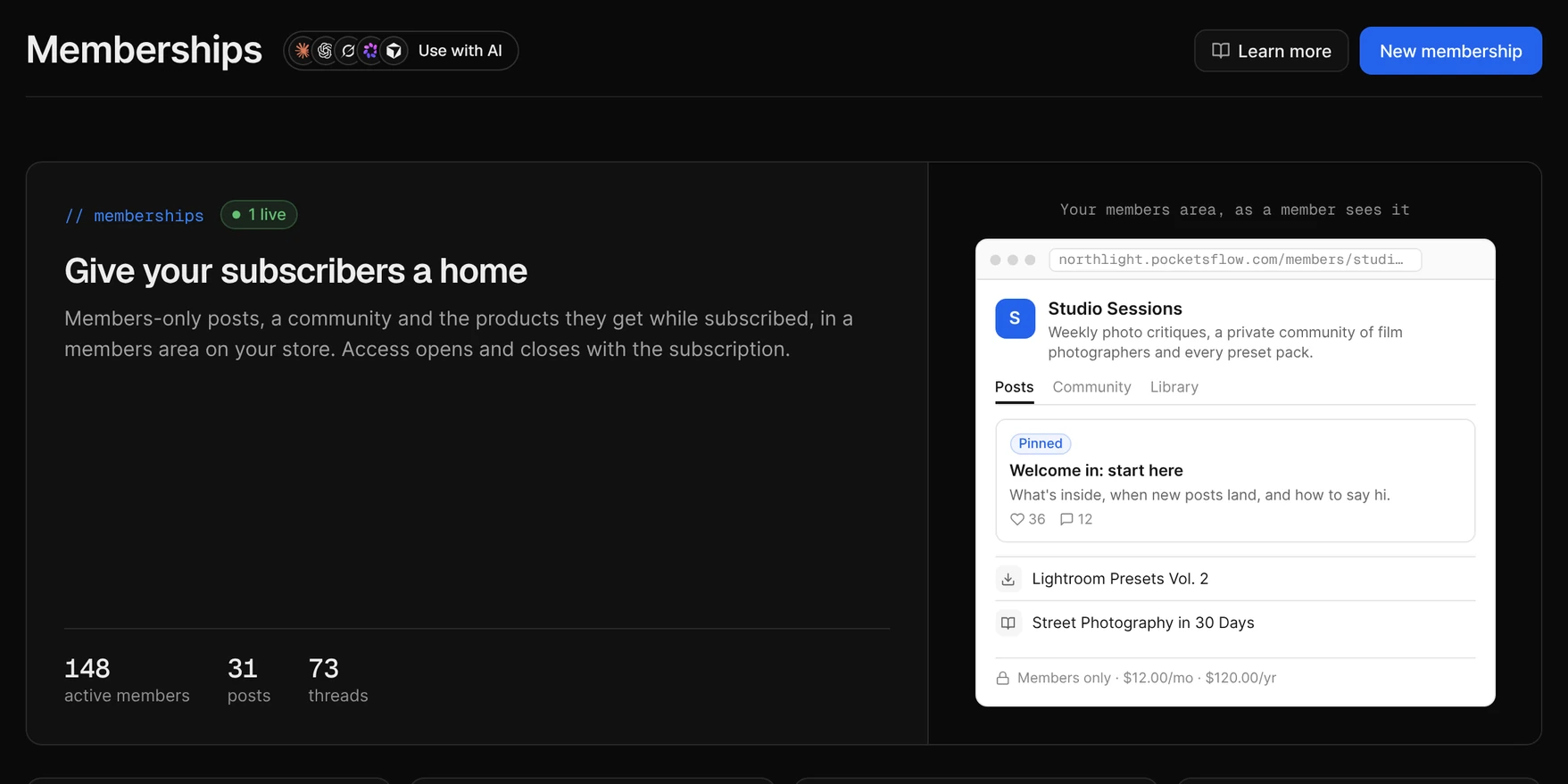
Memberships
Members-only posts, a community and your courses while they stay subscribed.
Pro and upLoyalty and store credit
Buyers earn points on every order and spend them as store credit at checkout.
Growth and upSubscription retention
Recover failed payments, offer a pause or a discount before a cancel, and win new subscribers with an intro price.
Pro and upCustomer CRM
Lifetime value after refunds, every order, the emails they opened, notes and tags on one page.
Pro and up
Email your buyers for less.
Every paid plan includes email for your list, enough to write to everyone three to four times a month. Here is what the same list costs on the big email tools.
Email pricing comparedExtra on email, every year
−$480more on MailerLite, the cheapest of the big email tools, for a 10,000 subscriber list.
- PocketsflowEmail plans$49/mo
- MailerLiteComfort+$40$89/mo
- beehiivLite+$90$139/mo
- MailchimpStandard+$86≈$135/mo
- KitCreator+$51≈$100/mo
Monthly plans, US dollars, checked October 12, 2026. ≈: no official per-tier price, so the lowest recent third-party figure. Striped: what each tool costs on top of Pocketsflow.
Sell everywhere. We handle the tax.
Buyers see the price in their own currency, with the right VAT, GST or sales tax added before they pay. As your Merchant of Record, Pocketsflow calculates, collects and remits it, so a sale in Tokyo is as simple as one at home.
- Prices in the buyer's local currency
- VAT, GST and sales tax added at checkout
- Collected and remitted as your Merchant of Record
- An invoice with the tax on every order
One price, every buyer.
Set one price. Each buyer sees it in their own currency with their country's tax already added, and you get paid in yours.
A $179 product, as the buyer pays it

US-TX: $193.77, Sales tax 8.25%
Their currency, their tax, added at checkout. Pocketsflow, as Merchant of Record, collects and remits it. Exchange rates are illustrative.
From a buyer abroad to your payout.
The buyer pays in their own currency with the right tax added. Pocketsflow, as your Merchant of Record, collects and remits that tax, and you get paid.
Supported countries- Work out the tax
- Take the payment
- Handle the tax
Illustrative sales from our demo creators.
And a real API when you need one.
Open a checkout from your own app, then hear about every order, refund and subscription change through a signed webhook. One SDK, one base URL, live and test data kept apart.
import { Pocketsflow } from "pocketsflow";

const pf = new Pocketsflow({
  apiKey: process.env.POCKETSFLOW_API_KEY,
});

// A one time product. Use subscriptionOffers.create() for plans.
const product = await pf.products.create({
  name: "Pro license",
  price: 49,
});

// A hosted checkout for that product.
const session = await pf.checkout.create({
  productId: product._id,
  successUrl: "https://example.com/welcome",
  customerEmail: "buyer@example.com",
});

// Send the buyer to session.url. Payment, tax, and delivery
// are handled; order.completed fires to your webhook.
redirect(session.url);
19 webhook events, HMAC-SHA256 signedpayloads →
- order.completed
- order.refunded
- customer.created
- product.created
- product.updated
- product.deleted
- review.created
- customer.subscription.created
- customer.subscription.updated
- customer.subscription.pause
- customer.subscription.resumed
- customer.subscription.trial_will_end
- customer.subscription.deleted
- invoice.created
- invoice.upcoming
- invoice.payment_succeeded
- invoice.payment_failed
- payment_intent.succeeded
- payment_intent.payment_failed
Every sale, on your server in real time.
Pocketsflow signs each event and posts it to your URL. Verify the signature, read the payload, answer 200. Fulfil, provision and sync from there.
Webhook docs- Sign with your secret
- POST to your URL
$ listening on /webhooks/pocketsflow
POST /webhooks/pocketsflow X-Pocketsflow-Event: order.completed
signature verified (HMAC-SHA256)
{
  "id": "evt_5f1c2a9b3e4a0012abcd0d0e",
  "type": "order.completed",
  "created": 1767225600,
  "amount": 1000,
  "currency": "usd",
  …
}
200 OK
Fulfil the order and grant access
The documented events, headers and payload fields. The ids are the docs' example ids.
Coming soon
A crypto wallet for your business, built to stay yours.
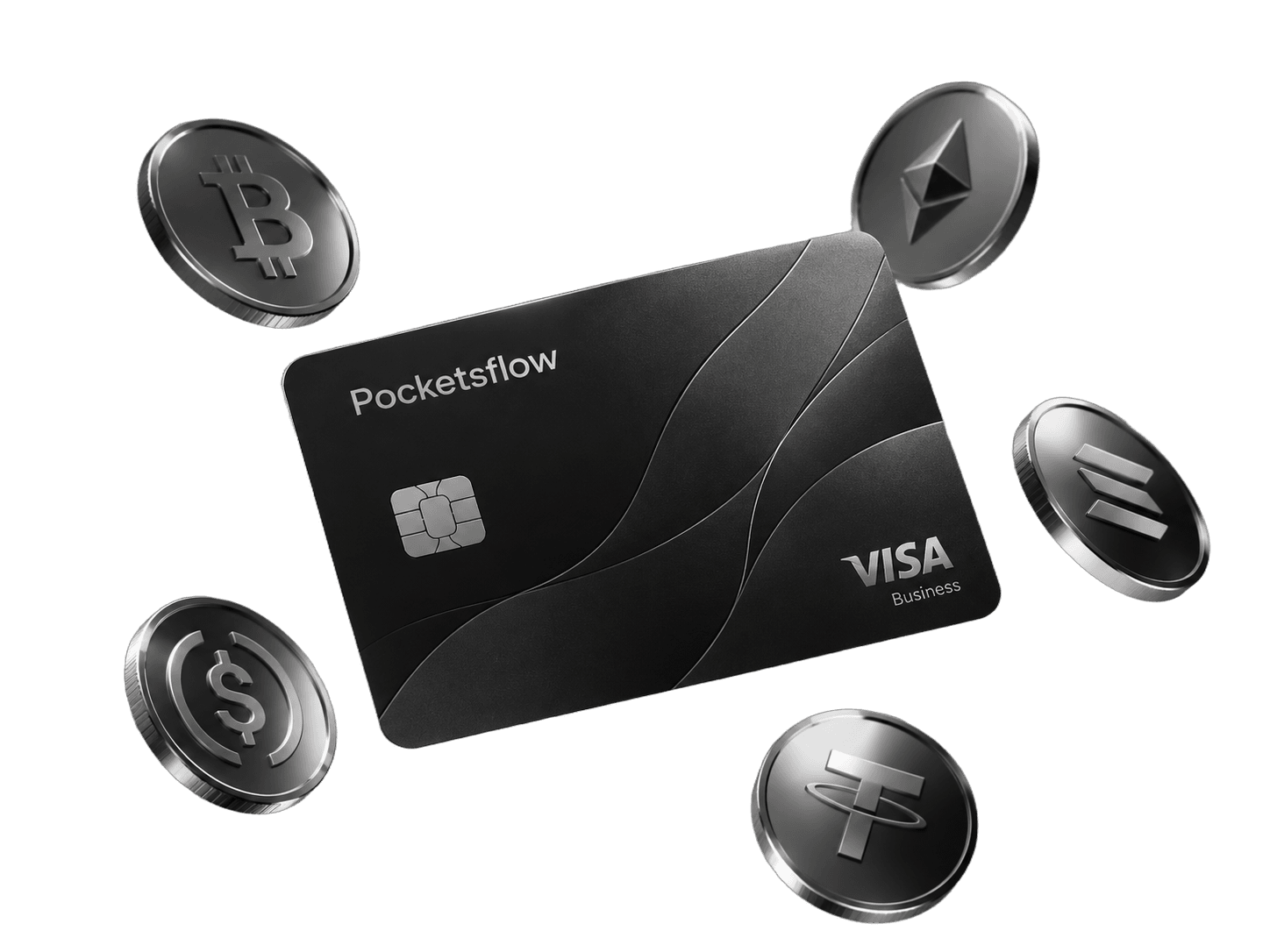
Pocketsflow Banking is on the way: a non custodial crypto wallet for your business, on the same login as Payments. Hold BTC, ETH, SOL, USDC, and USDT, move them on chain with the fee shown before you confirm, and spend the balance with a Pocketsflow business card. You hold the keys, and Pocketsflow never moves your money without you.
The wallet is in beta as a Chrome extension. The business card, eligible countries, supported assets, limits, and fees are still being finalized.
Non custodial crypto wallet
Your keys stay yours. Pocketsflow never holds your balance or signs a transaction for you.
Hold major assets
Bitcoin, Ethereum, Solana, USDC, and USDT in one balance, with the on chain fee shown before every move.
Send and receive on chain
Share your wallet address or send to any address, and watch the transfer confirm in your history.
Spend with a business card
Fund a Pocketsflow business card from your crypto balance and spend it anywhere cards are accepted.
On and off ramp
Top up from a bank account or card, and withdraw to an eligible bank account with the transfer and payout tracked separately.
Same Pocketsflow login
Banking is its own app beside Payments. Balances stay separate; your login does not change.
It's easy. Even your AI can do it.
Add Pocketsflow to the AI you already use, sign in and click Allow access. No API key, no code.
- 01Paste into your AI appThen sign in and click Allow.www.pocketsflow.com/mcp
Add Pocketsflow
Paste the server URL as a connector in your AI app.
- 02
Sign in and allow
Your AI opens Pocketsflow. Click Allow access.
- 03
Ask for anything
Products, orders, refunds, emails, in plain words.
Drag the price. See what you keep.
One sale, split: what lands with you and what the platform takes, on Pocketsflow and the platforms creators usually come from.
PricingOne sale, split
$27.34
yours from a $29.00 sale on Pocketsflow, card processing and tax handling included.
- Pocketsflow$27.34fee 5.7%
- Gumroad$24.46fee 15.7%
- Lemon Squeezy$26.92fee 7.2%
Ink: what you keep. Striped: the fee, everything the platform and its card processor take. 30% of buyers outside the US.
Keep more of every sale.
One month at $29.00 a sale and 50 sales, with 30% of buyers outside the US. Everything each platform and its card processor take, from their public pricing, checked October 17, 2026.
Lost to fees, every year
−$1,727more in fees on Gumroad than on Pocketsflow, selling a $29 product 50 times a month.
- PocketsflowDigital products$83/mo
- GumroadDirect sales+$144$227/mo
- Lemon SqueezyStandard+$21$104/mo
- StanCreator, monthly+$9$93/mo
Fees for the month: everything the platform and its card processor take. Striped: what each one takes on top of Pocketsflow. 30% of buyers outside the US.
| Platform | What it charges | Fees this month | You keep | Tax handled |
|---|---|---|---|---|
| PocketsflowDigital products | 4.7% + $0.30 per sale, card processing and tax handling included. No monthly fee. | $83.155.73% | $1,366.85 | Yes |
| GumroadDirect sales | 10% + $0.50 per sale plus card processing (2.9% + $0.30). 5% + $0.50 on new sales once a month passes $20,000. | $227.0515.66% | $1,222.95 | Yes |
| Lemon SqueezyStandard | 5% + $0.50 per sale, +1.5% for buyers outside the US, +0.5% on subscription payments. | $104.037.17% | $1,345.97 | Yes |
| StanCreator, monthly | $29 a month and no platform fee, plus card processing (2.9% + $0.30, +1.5% for buyers in another country). Sales tax is yours to file. | $92.586.38% | $1,357.42 | No, you file it |
Pocketsflow on the Free plan. Sales tax and VAT are added for the buyer, never taken from what you keep.
Tax, payouts and fraud, handled.
Pocketsflow is the Merchant of Record: the legal seller on every order. You sell; we deal with tax offices, card networks and fraud.
How Merchant of Record worksTax handled
As Merchant of Record, Pocketsflow calculates, collects and remits sales tax and VAT in 130+ countries, and sends every buyer an invoice.
Paid on your schedule
Payouts to your bank account or crypto wallet daily, weekly, monthly or on demand, with a receipt for each one.
Fraud and chargebacks
Every order is screened for fraud, and Pocketsflow answers the bank when a buyer disputes a charge.
Local prices
Buyers in 160+ countries see prices in their own currency and pay with the methods they know.
Security and compliance, built in.
Pocketsflow is PCI DSS compliant and never stores raw card numbers. Payment data is tokenized and traffic uses TLS 1.2 or higher, with 3D Secure when required. Sensitive data is encrypted at rest and in transit, access is least privilege and reviewed quarterly, and the platform is covered by annual third party penetration testing, automated vulnerability scanning, and intrusion detection.
More about security- SOC 2 Type IIIndependent audit of security, availability, and confidentiality controls.Details about SOC 2 Type II
- PCI DSSPayment Card Industry Data Security Standard for card processing.Details about PCI DSS
- ISO 27001Information security management system certification.Details about ISO 27001
- GDPR & CCPAPrivacy frameworks for EU and California personal data.Details about GDPR & CCPA
- EU to US Data Privacy FrameworkTransfer mechanism for personal data between the EU and the US.Details about EU to US Data Privacy Framework
- HIPAASafeguards for protected health information where applicable.Details about HIPAA
One fee. Itemized on every order.
Selling needs no subscription. Each sale carries one estimated transaction cost, and every order shows exactly how it breaks down.
4.7% + $0.30
estimated cost per sale · no monthly fee
- No monthly fee, no setup fee. You pay when you sell.
- One transaction cost, itemized on every order: platform, payment infrastructure, tax handling when required, dispute prevention.
- Selling $50,000 or more a month? The Volume plans lower the platform fee to 1% or 0.5%.
Good questions, straight answers.
What does Pocketsflow cost?
Selling is free to start: no monthly fee and no setup fee. Each sale pays a 2% platform fee plus payment processing (about 2.7% + $0.30), so about 4.7% + $0.30 in total: $5.00 on a $100 sale, itemized on every order. Paid plans add growth tools, and the Volume and Volume Max plans lower the platform fee to 1% and 0.5%.
When do I get paid?
Connect your payout account in Settings, Payments and verify your identity; live payouts wait for that. New sales sit in a pending balance for a short holding period, then become available and are paid to your bank account or crypto wallet daily, weekly, monthly or when you ask. Timing depends on your country and payout method, and every payout comes with a receipt.
Can I move my store from Gumroad, Stan or Lemon Squeezy?
Yes. Import my store brings over products, customers, purchase history and your email list from Gumroad, Lemon Squeezy, Stan or a CSV, and shows you a dry run before anything is written. Store import is part of the Volume plans, where our team can run it with you for free. On every plan you can add products yourself and import your subscribers from a CSV.
How do refunds and chargebacks work?
Refund any order, in full or in part, from the dashboard, the API or your AI; the buyer is refunded on their original payment method and the amount comes out of your balance. If a buyer disputes a charge with their bank, Pocketsflow handles the dispute as Merchant of Record. Under the Disputes Policy a lost chargeback, plus a $15 dispute fee, is deducted from your next payout; the fee comes back if the dispute is won. Volume plans include dispute cover.
Who handles sales tax and VAT?
Pocketsflow is the Merchant of Record. By default it calculates, collects and remits eligible sales tax and VAT on every sale, handles fraud checks and chargebacks, and sends the buyer an invoice. Tax is added at checkout, never taken from your earnings. You can also choose to remit tax yourself in Settings, Taxes.
Who owns my customer list?
You do. Every buyer and subscriber sits in your audience with their orders, and you can export them to CSV at any time, on every plan. If you ever leave, your list leaves with you.
Can I cancel anytime?
Yes. There is no contract. Selling on the Free plan has no monthly fee at all, and a paid plan can be changed or canceled in Settings, Billing whenever you like. You keep its features until the end of the period you paid for, then the account moves to Free.
Open your store today.
Sell your first product in minutes, keep more of every sale, and let the AI you already use run the busywork.